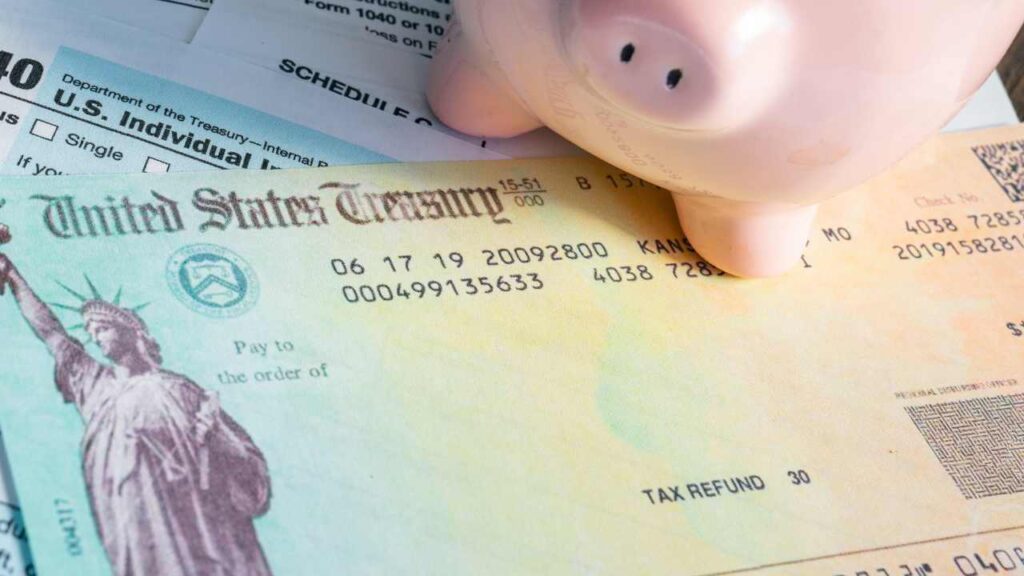
President Donald Trump’s proposal to deliver a stimulus check funded by tariff revenue has generated intense political and economic debate in the United States… and this was actually expected by the White House and the fans of stimulus checks plans.
Although the White House insists that low- and middle-income Americans will be able to receive payments “of at least $2,000,” various analysts warn that the numbers don’t add up and that the amount could end up being significantly lower, perhaps even as little as $600 or $700 per person.
Is a $2,000 Stimulus Check Coming? The Fine Print Says Otherwise
The president has promoted the initiative as a “national dividend” derived directly from the new tariffs imposed on imports, a policy that has been a cornerstone of his economic strategy. According to the official narrative, this revenue would allow the government to return “money from abroad to American citizens” without resorting to additional debt.
The idea seeks to emulate the popularity of the stimulus checks issued during the pandemic, which became tangible financial relief for millions of households. However, the comparison is misleading: those payments were funded by federal spending approved by Congress, not by business revenues subject to fluctuations.
Although the government maintains that current tariff revenues would allow for the funding of an ambitious program, public figures paint a more complex picture. In 2025, tariff revenues were remarkably high due to the new wave of tariffs imposed on goods from China and other countries.
Some estimates cite figures close to $195 billion annually, which would seem to indicate fiscal space for a transfer program. However, fiscal experts point out that these revenues are insufficient to cover the full cost of the checks as announced.
Trump’s Tariff-Funded Stimulus: Inflation, Legal Battles, and a Broken Promise?
According to calculations released by the Tax Foundation and other independent institutions, funding $2,000 payments to adults within a certain income bracket would cost approximately $300 billion. If dependent children were also included, as in previous stimulus packages, the expenditure would increase even further.
Given this scenario, the gap between revenue and costs becomes evident: even in an exceptional year, tax revenues would not be enough to cover the promised amount. Hence the warning from several economists and legislators that the final amount could be drastically lower.
Tariffs essentially function as import taxes, a factor that typically translates into higher prices for basic consumer goods. If this effect is combined with the injection of money into households, the result could be a further increase in demand in an already pressured market, exacerbating the inflationary pressures that the country has been trying to control for years.
Some analysts go even further, warning of a risk of “stagflation,” a combination of economic stagnation and rising prices that would be particularly damaging to the most vulnerable sectors of society.
The Math Behind Trump’s $2,000 Check Promise Doesn’t Add Up
The plan also faces serious legal hurdles. For the payments to be issued, congressional approval is required, a point the White House avoids emphasizing. Republican and Democratic lawmakers have expressed concerns about both the cost and the precedent it could set.
Adding to the complexity is the ongoing judicial review of the tariffs imposed under the International Emergency Economic Powers Act, the law the administration has used to justify the tariffs. If the Supreme Court were to determine that this law was improperly applied, the revenue currently supporting the proposal would be jeopardized.
Faced with these challenges, voices both inside and outside the government have begun to suggest alternatives, such as transforming the “tariff dividend” into a limited tax cut or a tax credit—less costly mechanisms with less inflationary impact. These options, while less politically appealing, could offer more sustainable relief without compromising budgetary stability.
Meanwhile, some economic advisors have proposed targeting payments solely to the most vulnerable households, which would reduce the overall cost and allow for larger sums to be distributed to a smaller group.