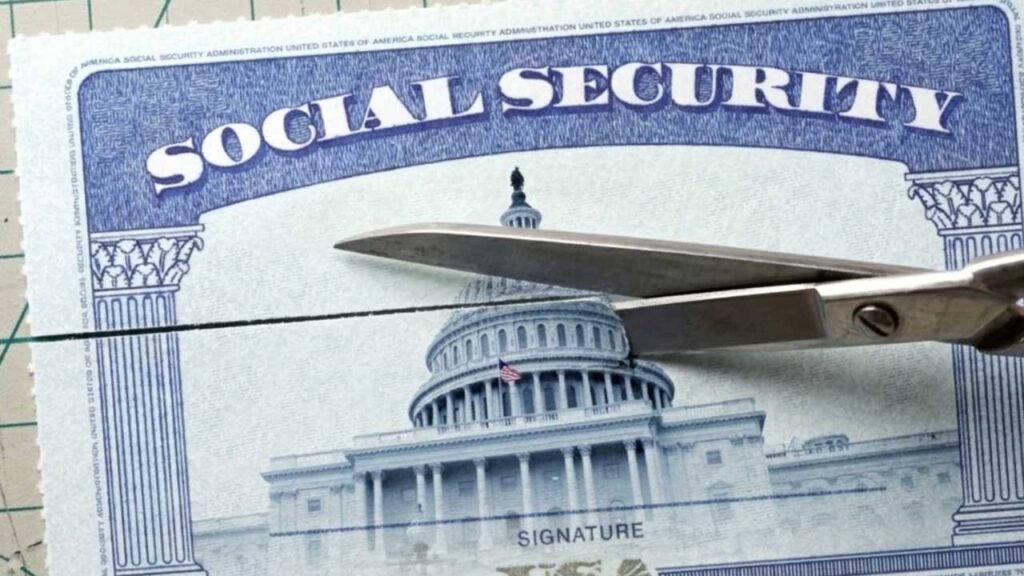
A recent report from the Congressional Budget Office has moved up by a year the date when Social Security funds could run out. What seemed like a crisis for 2033 now points to 2032, and that changes the outlook for tens of millions of American retirees.
The warning didn’t come from a lobbying group or a politician on the campaign trail. It came from Congress’s most respected technical body, the CBO, which in February 2026 published its budget outlook for the next decade. The diagnosis is clear: the Old-Age and Survivors’ Insurance Trust Fund, known as OASI, will be depleted by 2032 if the government doesn’t act sooner.
Congress Got a Warning That Social Security Can’t Afford to Ignore
The OASI fund is the primary mechanism that finances monthly retirement checks and benefits for surviving spouses. It covers more than 62 million Americans, representing approximately 90% of all Social Security beneficiaries. The remainder receive disability benefits through a separate fund, the Disability Insurance (DI).
Last year, the Social Security Trustees’ Report, published in June 2025, estimated that the OASI would reach zero by 2033. That projection was already worrying. But the CBO has just cut that timeframe to only six years.
According to the agency, the depletion of the fund would trigger an immediate cut of around 7% for all beneficiaries in 2032, and the cuts would deepen to approximately 28% between 2033 and 2036.
The Retirement Clock Just Lost a Year
There is, however, a technical loophole. If Congress were to merge the OASI fund with the Disability fund, the program would gain an additional year of stability. The CBO notes that, combined, both funds could keep the program running smoothly until 2033. It’s a marginal difference, but in terms of public policy, it could be the difference between an orderly reform and an improvised crisis.
The earlier date is explained not by a single factor but by a convergence of trends. Higher inflation means larger cost-of-living adjustments, which accelerate the fund’s depletion. The CBO projects a 3.1% adjustment for 2027, at the high end of estimates.
At the same time, program revenues will be reduced by a decline in payroll and individual income taxes. Added to this is the aging population: there are increasingly more beneficiaries and proportionally fewer workers contributing to the system.
Has the Social Security Experienced These Situations in the Past?
Historical precedent offers some comfort. Social Security already faced a funding crisis in the 1980s, and Congress intervened with structural reforms in 1983.
Analysts like Alicia Munnell, founder of the Boston College Center for Retirement Research, have pointed out that even if the trust funds were completely depleted, about 80% of benefits would still flow because it is funded in real time through payroll taxes. No one, however, wants to reach that point.
The underlying problem is structural and has no easy solution. The only way to avoid cuts is to increase program revenue. The most discussed options include raising or eliminating the payroll tax ceiling, which would primarily affect higher-income workers, although any major reform would likely require some sacrifice from the middle class as well.
The Congress Must Act ASAP to Save Social Security
Max Richtman, executive director of the National Committee to Preserve Social Security and Medicare, summed up the situation with a stark statement: “We don’t have much time to address the deficit.” CBS News
For now, there is no concrete plan on the table. Congress has yet to present a reform proposal, and the administration has not indicated any initiatives in this regard. The Urban Institute also warns that politicians could misinterpret automatic cuts to the fund as real budget savings, when in reality that money will have to be paid back sooner or later.
For workers still in the workforce, the message is clear: don’t plan for retirement assuming Social Security benefits will remain the same. Experts recommend maximizing contributions to individual retirement accounts like IRAs and 401(k)s, reviewing when it makes the most sense to claim benefits, and staying informed about any legislation Congress may pass in the coming years. The countdown has already begun. Six years to go.