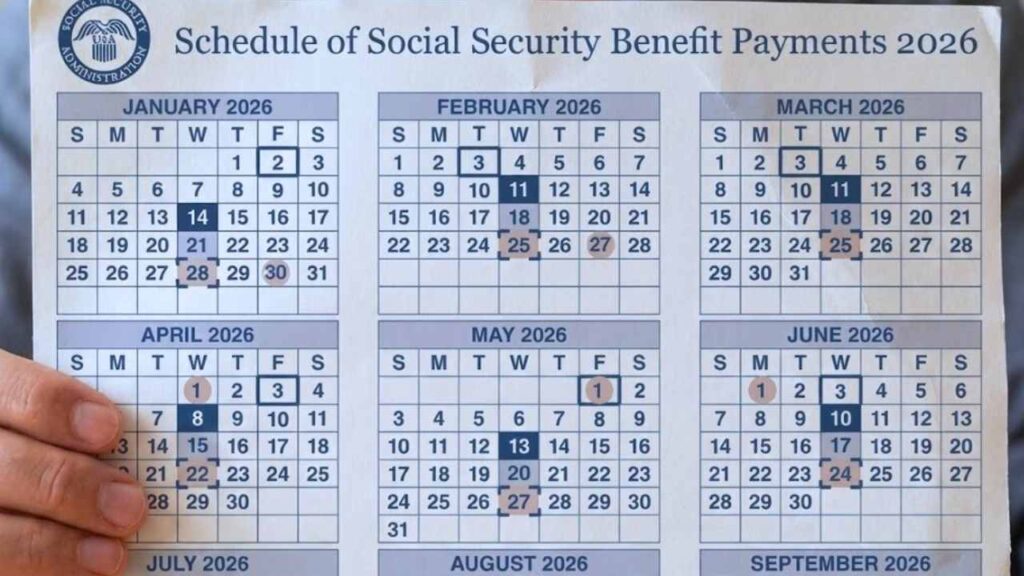
The Social Security system is a basic component of economic planning for a big (I mean, HUGE) portion of the elderly population in the United States. This program distributes monthly payments to approximately 74 million people.
Many beneficiaries are completely dependent on these funds, a situation documented by accounts from individuals who manage their finances exclusively with these resources and from octogenarians who hold jobs to supplement their income. The beginning of next year will bring a series of changes to the operation of these benefits.
Social Security Changes Coming in January: From COLA to Medicare Costs
The core funding and eligibility mechanisms will remain unchanged in January. The system is primarily funded by payroll taxes collected throughout taxpayers’ working lives. The amount of individual monthly checks is calculated based on accumulated earnings histories.
The minimum age to apply for retirement benefits remains at 62, although acceptance at that age results in a permanent reduction in the monthly payment.
The so-called full retirement age (FRA), which allows access to the full amount of the benefit, is set at 66 or 67 years for the generation of baby boomers. Delaying the application beyond this age, up to a maximum of 70, results in gradual increases culminating in the highest available monthly allowance.
Payment ranges typically vary between $800 and $3,000 per month, depending on prior income and age at application. Surviving spouses have the option of receiving benefits based on their deceased partner’s employment record.
SSI and SSDI Programs Will Also Change
The administrative agency also manages programs targeting specific segments of the population. Supplemental Security Income (SSI) is designed for people with limited resources, generally those with incomes below $2,000 per month, a threshold close to 130% of the federal poverty level.
On the other hand, the Social Security Disability Insurance (SSDI) program provides monthly payments to individuals with a disabling condition expected to last at least a year or more and that impairs their ability to work.
These support programs remain accessible with no changes to their basic eligibility criteria for the coming year. The interaction between these programs and state or local aid may affect the net financial situation of beneficiaries. Coordination of benefits is a factor that applicants should consider during the enrollment and annual review process.
The Cost-Of-Living Adjustment: 2.8% Increase From January
A noteworthy element of the 2026 update is the implementation of the Cost-Of-Living Adjustment (COLA). This increase, calculated at 2.8%, is derived from an analysis of inflation data for the third quarter of the previous year. As a result, the average beneficiary is estimated to receive approximately $60 more per month.
After several years of high percentages during the period of high pandemic inflation, recent adjustments have stabilized in the 2% to 3% range.
This automatic increase aims to prevent the purchasing power of payments from being eroded by general price increases. However, it has indirect implications for those who rely on multiple assistance programs.
A slight increase in Social Security income could potentially place some beneficiaries above the strict eligibility limits for other benefits, such as Supplemental Nutrition Assistance Program (SNAP) or Medicaid. Therefore, low-income retirees are advised to verify the eligibility criteria for all the programs in which they participate.
Tax Obligations Related to the Benefits Received
Social Security benefits are subject to federal income tax under certain conditions. The taxable portion of benefits can reach up to 85%, determined by a formula that considers the combined household income.
However, there are exclusion thresholds: benefits are not taxable for individuals with a combined income below $25,000 and for couples filing jointly with a combined income below $32,000. Supplemental Security Income (SSI) payments, being need-based, are tax-exempt.
Recently, a relevant tax provision was added for this group. Under President Donald Trump’s One Big Beautiful Bill Act—or OBBBA, signed in July—taxpayers aged 65 and older can claim an additional tax deduction of up to $6,000, on top of their standard deduction.
This rule, in effect until 2028, expands a pre-existing tax exemption for seniors. In practice, for the 2025 tax return, this means that a single senior taxpayer can deduct up to $23,750, while a senior couple filing jointly can claim up to $46,700.
Adjustments to Costs Associated With the Medicare Program
Most Social Security beneficiaries are also enrolled in Medicare, the federal health insurance program for people 65 and older and some people with disabilities. The open enrollment period for this program ran from November to December 7. While Medicare’s basic structure will not change in 2026, out-of-pocket costs for beneficiaries will increase.
This increase is attributed to the general upward trend in healthcare prices in the country and the progressive aging of the generation of baby boomers, which demands more services.
A reflection of this is the projected increase of approximately 10% in Medicare Part B premiums, which covers outpatient medical services and diagnostics. Medicare is organized into several parts: Parts A and B comprise the original medical and hospital insurance; Medicare Advantage includes private plans that follow federal rules; and Part D provides coverage for prescription drugs.
Medicare eligibility is primarily based on age, while Medicaid eligibility depends on income, allowing some individuals to qualify for both programs simultaneously. This dual eligibility can mitigate the impact of cost increases for a subset of beneficiaries.