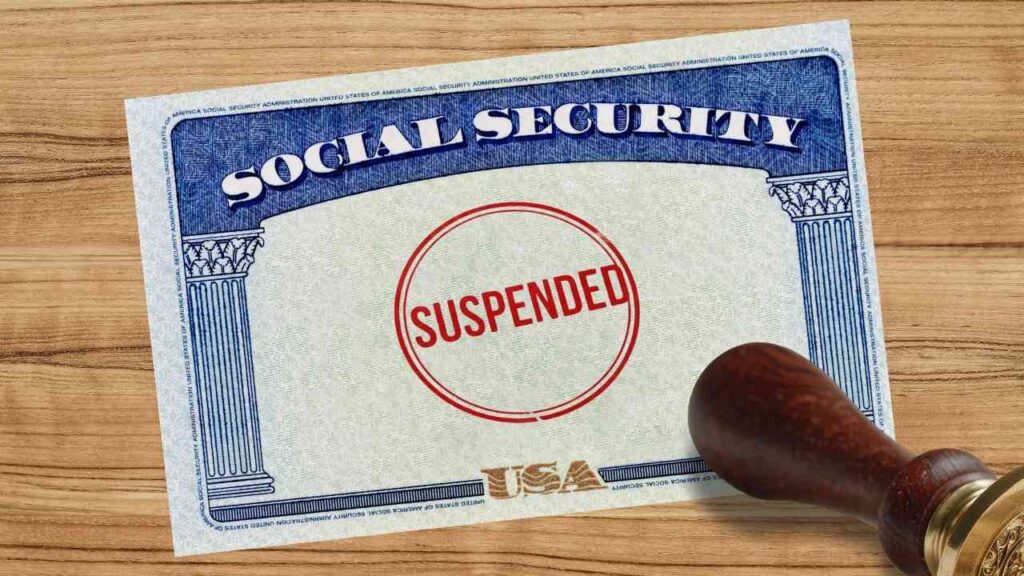
The safeguarding cushion that millions of Americans expect to receive in old age or in times of need, that is the Social Security, is not foolproof. In fact, it can unravel completely under certain circumstances.
While most are familiar with the reductions for working after retirement or the deductions for debts like student loans, there is one mistake that can lead to the total and absolute loss of Social Security and SSI payments.
It’s not a gradual adjustment: it’s a sudden and definitive cutoff, and it can be terrifying. The warning is buried in Social Security Administration brochures, but its implications are brutal: incarceration, for example, can nullify your benefits entirely.
Mistake That Erases Your Social Security
The SSA is clear in its document “What Prisoners Need to Know”: Social Security Disability Insurance (SSDI) and Supplemental Security Income (SSI) payments generally stop during the months of incarceration for a crime. This applies to jails, prisons, and other penal institutions.
The major difficulty lies in the generality of the rule and the opaque reinstatement process. It is not an automatic suspension with automatic reactivation upon release. It is an administrative cliff.
For SSI Recipients, the Rule is Even Stricter
If incarceration lasts for 12 consecutive months or more, the SSA rescind your eligibility. The word is crucial: it does not suspend… it ends. The burden of restarting the process, with all the bureaucracy and the potential accumulation of new medical and financial documentation, falls entirely on the individual after their release.
At a time of extreme vulnerability, following incarceration, they face the prospect of starting from scratch, with possible financial hardship.
The Exception That’s No Comfort
The exceptions are minimal. Brief incarcerations, less than 30 days, usually do not trigger the suspension. Benefits for eligible spouses and children can continue. But for the incarcerated individual, the flow stops. And although the SSA offers mechanisms to inquire about resumption, the reality is a maze of procedures.
“The best thing to do is contact Social Security directly,” they advise, a generic solution for a problem of overwhelming complexity. Now, qhat is the scale of this problem? The numbers paint a disturbing picture.
According to federal data, there are 153,651 people in federal prisons. Of these, 4,660 are over 65 years old. However, this is just the tip of the iceberg. Approximately 87% of the incarcerated population is in state prisons, where data on older adults is fragmented and outdated.
Many state systems only track data for those “over 55,” a low threshold that masks the reality of those who are entirely dependent on Social Security. There are thousands, potentially tens of thousands, at risk of being released from prison without the income that sustains them.
Would Your Benefits Survive an Encounter With the Penal System?
Experts in justice and social policy see this as a double punishment. “The penal system not only deprives people of their freedom, but also activates mechanisms that can deprive them of basic necessities upon reintegration,” notes an analyst who preferred to remain anonymous. “It’s a recipe for relapse and destitution.”
The loss of benefits is not presented as part of the judicial sentence, but as a collateral administrative consequence, often not understood by those affected until it is too late.
So, to protect 100% of your Social Security benefits, you must understand that certain actions have consequences that extend beyond the legal realm. Incarceration, even for nonviolent offenses or medium-term sentences, can trigger an administrative chain reaction that leaves a person, particularly an older adult or person with a disability, without essential financial security.