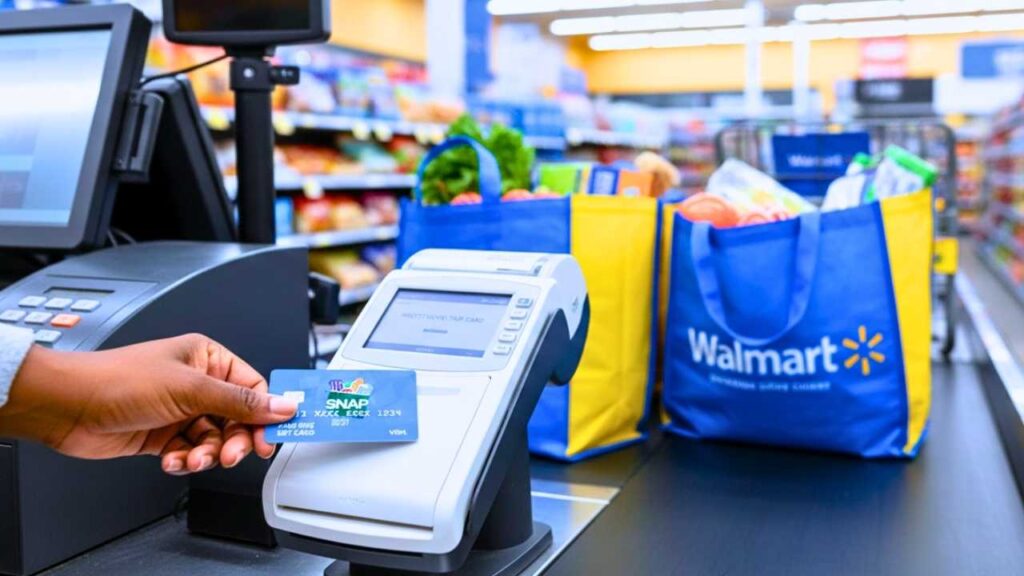
The hum of the fluorescent lights at the Winn-Dixie on South Orange Blossom Trail will sound the same on April 20 as it did on April 19, but the algorithm inside the payment terminal will have undergone a quiet, radical blast. Is it your SNAP benefits EBT card failing? No, it’s not.
It’s a change that won’t make the evening news in a flashy way, but it will rewire the nervous system of Florida’s hunger safety net. Starting that Sunday, the Supplemental Nutrition Assistance Program (SNAP), the modern iteration of food stamps, stops being a blank check for just any calorie and begins operating more like a stern family physician.
Change to the SNAP Benefits Coming in April
For months, state agencies have been loading new Universal Product Code (UPC) restriction lists into the back-end software that powers Electronic Benefit Transfer (EBT) card readers. When a shopper slides that plastic card through the groove at Register 4, the machine will no longer just ask, “Is this food?” It will ask, “Is this actual nutrition?”
The policy shift is the sharpest edge of the “Make America Healthy Again” (MAHA) mission being driven from Washington by Health and Human Services Secretary Robert F. Kennedy Jr.
The administration’s calculus is simple and, depending on who you ask, either brutally efficient or cruelly paternalistic. Secretary Kennedy has emphasized that the goal is to stop financing the products that don’t feed the population that is most at risk.
Restrictions to Food Stamps: The Soda Aisle is Now a Minefield (But Gatorade is Safe)
According to guidance issued by the Florida Department of Children and Families (Myflfamilies), the items flagged for rejection as of April 20 are specific and unsparing. The soda aisle becomes a minefield. That 20-ounce bottle of cola with its 65 grams of sugar? Declined.
The energy drink marketed with images of extreme sports and vortexes? Declined. The shelf-stable, ultra-processed snack cakes that taste like childhood and last as long as plutonium? Gone. But the nuance is where the real-world confusion will germinate.
Gatorade and Powerade get a pass—a carve-out that acknowledges the brutal Florida heat and the need for electrolyte replacement. Unsweetened sparkling waters like LaCroix or Bubly remain eligible. So does any beverage that can claim more than 50 percent actual fruit juice content or dips below the five-gram sugar threshold per serving.
Other States Restricting SNAP Purchases
Florida is not alone on this island. It’s the latest, and one of the largest, dominoes to fall in a national cascade. On April 1, Texas flipped a similar switch with a much broader, more draconian brushstroke.
The Texas Health and Human Services commission explicitly banned not just soda but also nuts, raisins, or fruits coated in chocolate or yogurt—a prohibition that effectively criminalizes a trail mix bag if it looks too much like dessert.
West Virginia, which had banned soda on January 1, ended its retailer grace period on April 1, meaning a corner store owner in Wheeling now faces a formal warning on a first infraction and outright removal from the SNAP program on the second.
Virginia, meanwhile, took a surgical approach on the same day, targeting only carbonated sugar bombs while leaving sweet tea—a cultural institution in the South—completely untouched and fully eligible.
The New Geography of SNAP: 18 States Under a Microscope
The American Enterprise Institute estimates that with these waivers now active across 18 states, roughly 31 percent of the nation’s SNAP participants are shopping under a new, more restrictive dietary regime. That’s tens of millions of people, from the coasts of Florida to the plains of Texas, who will have to learn a new lexicon of ingredient labels.
And yet, the checkout line restriction is only one piece of a much larger and more punitive puzzle that is tightening the screws on food aid eligibility. The One Big Beautiful Bill Act (OBBBA) has fundamentally reshaped the work requirement landscape in a way that may overshadow the soda ban by summer.
What About the ABAWDs?
Under the new law, the age ceiling for Able-Bodied Adults Without Dependents (ABAWDs) subject to work requirements has been hoisted from 54 to 64 years old. That means a 60-year-old who lost a job in manufacturing and is waiting for Social Security to kick in can no longer rely on a sustained SNAP cushion.
They get three months of benefits in a 36-month window, period. The exemption that once shielded parents with children under 18 has also been vaporized.
The $186 Billion Footnote They Hoped You’d Skip
The Congressional Budget Office has already priced this shift, tallying a reduction of $186 billion in federal SNAP funding through 2034. That’s not a trim around the edges; it’s the largest single contraction of the food assistance apparatus in the country’s modern history.
Tucked inside that legislative language is also the elimination of the state flexibility waiver for high-unemployment zones. Unless a county sees unemployment soar past ten percent—a figure rarely seen outside of a deep recession—the local labor market is deemed fit for work, and the clock is ticking.
The Sunday Afternoon Reckoning at Self-Checkout Lane 4
Back in Florida, the state is bracing for the soft launch of the policy on a sleepy Sunday. Store managers have been told to anticipate confusion at the self-checkout kiosks.
There will likely be moments where a cashier has to explain to a mother of three that the two-liter bottle of store-brand cola she just scanned is no longer covered, but the bottle of apple juice with the same price tag is. It’s a small distinction in the mechanical beep of a scanner, but a seismic one in the economic reality of a household where every dollar is already stretched to the vanishing point.