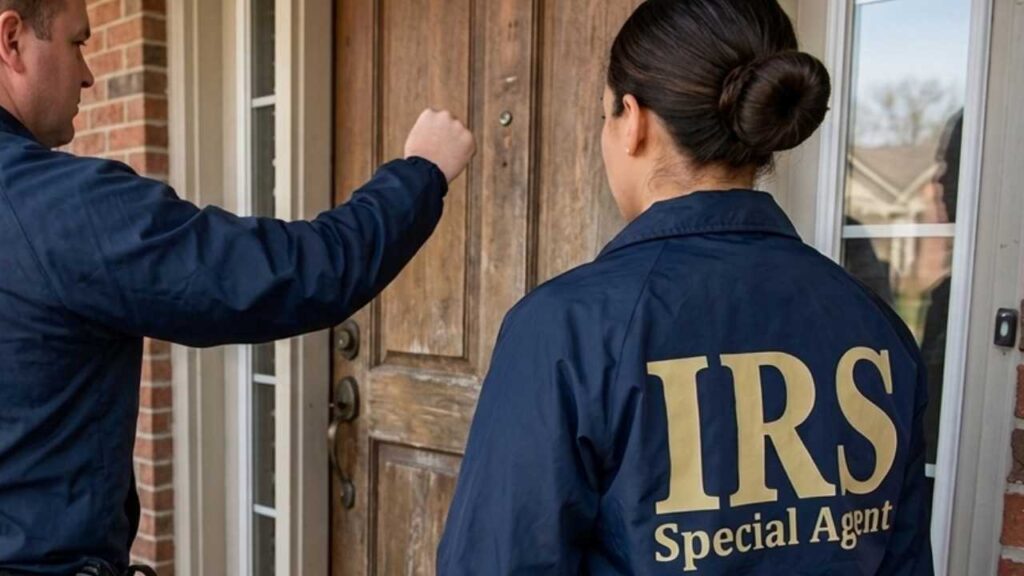
The Internal Revenue Service (IRS) does send real people to your door. Yes, it’s true. But the panic going around online leaves out a ton of context—like why it happens, what the rules actually are, and what you can do about it if a federal agent shows up.
Back in July 2023, the IRS quietly made a big shift. They announced that—in most cases—revenue officers would stop just showing up unannounced at people’s homes. Why? Because scammers had gotten so good at pretending to be the IRS that nobody knew who to trust anymore. Plus, it wasn’t exactly safe for anyone involved.
The IRS will send agents to your home: One thing must happen before
But here’s the catch: they didn’t stop doing in-person visits entirely. They just changed how they set them up. Now, before anyone knocks, you get a letter. It’s called Letter 725-B. Think of it as a heads-up that says, “Hey, a revenue officer has your file and wants to meet.” You’ll usually get it along with a form (9297) listing what paperwork they expect you to bring.
That meeting could happen at your house, your business, an IRS office, or even over the phone depending on the situation. What it won’t do is happen out of nowhere—unless it’s one of those rare exceptions they’ve built in.
Two very different kinds of IRS agents
This matters a lot, because people lump them together and they’re not the same.
- IRS Revenue Officers are civil enforcement. Their job: collect unpaid taxes, get missing returns filed, set up payment plans. They don’t carry guns. They don’t arrest anyone. It’s a financial conversation—stressful, sure, but not criminal.
- IRS Special Agents are a whole different type. These are Criminal Investigation Division people. If one of them shows up, the IRS thinks you might have committed a crime—tax evasion, fraud, money laundering, something serious. They carry law enforcement badges. If you see one of those, stop talking and call a lawyer immediately.
Why would they even come to your house?
The IRS doesn’t send people out for fun. You don’t get a knock just because you made a math error. A visit means things have piled up: ignored notices, a big unpaid balance, missing tax returns for multiple years, or a business that stopped paying its employment taxes. Sometimes it’s because they need to serve you papers or freeze assets before you move them.
If you file on time, pay what you owe (or set up a plan), and actually respond to letters? You’re not on their radar for home visits. This stuff is targeted, not random.
That letter you need to take seriously
Letter 725-B isn’t a suggestion. It tells you who the officer is, what the issue is, and when and where to meet. If you call and say, “Hey, can we reschedule?”—most officers will work with you. If you just ignore it? That’s when things go sideways fast.
They can file a lien, garnish your wages, empty your bank account, or seize your car or house. The upside: the letter buys you time to hire a tax attorney or enrolled agent. You have the right to bring someone to that meeting. Don’t let anyone tell you otherwise.
How to tell if the person at your door is legit
Scammers are good. Really good. So here’s what a real IRS agent must show you:
- A pocket commission (photo, name, serial number)
- An HSPD-12 card (standard federal employee ID)
- Special agents also carry a law enforcement badge.
If they can’t or won’t produce both forms of ID, shut the door. And here’s another red flag: if they show up and you never got any letters beforehand? That’s weird. Legit visits leave a paper trail. You can always say, “Let me confirm this,” and call the IRS directly using the main line—not a number they hand you.
This isn’t just about citizens
Foreign nationals, green card holders, undocumented immigrants—if you live here and meet the Substantial Presence Test, you have tax obligations. The IRS doesn’t care about your immigration status; they care about your income.
But there’s been an extra layer of tension since a 2025 data-sharing deal between the IRS and ICE. ICE sent the IRS about 1.28 million names and addresses. The IRS matched about 47,000 of them. Courts have put limits on how that data can be used, but it’s still messy and unresolved.
Also, as of August 2025, USCIS explicitly looks at tax compliance when deciding if someone has “good moral character” for naturalization or green card renewal. So yeah, unresolved IRS issues can now mess with your immigration status in ways they didn’t before.
What happens if you let them inside?
A revenue officer has a specific job: collect info, verify documents, close out the case. They’re not allowed to wander around your house, open drawers, or go into rooms that have nothing to do with the tax issue. That’s not their role.
They’ll probably ask for bank statements, pay stubs, proof of assets, and a list of your monthly bills. They’re trying to figure out what you can actually pay.
And here’s something people don’t realize: you can pause the conversation whenever you want to call a tax pro. That’s your right. Any agent who says otherwise is either wrong or lying.