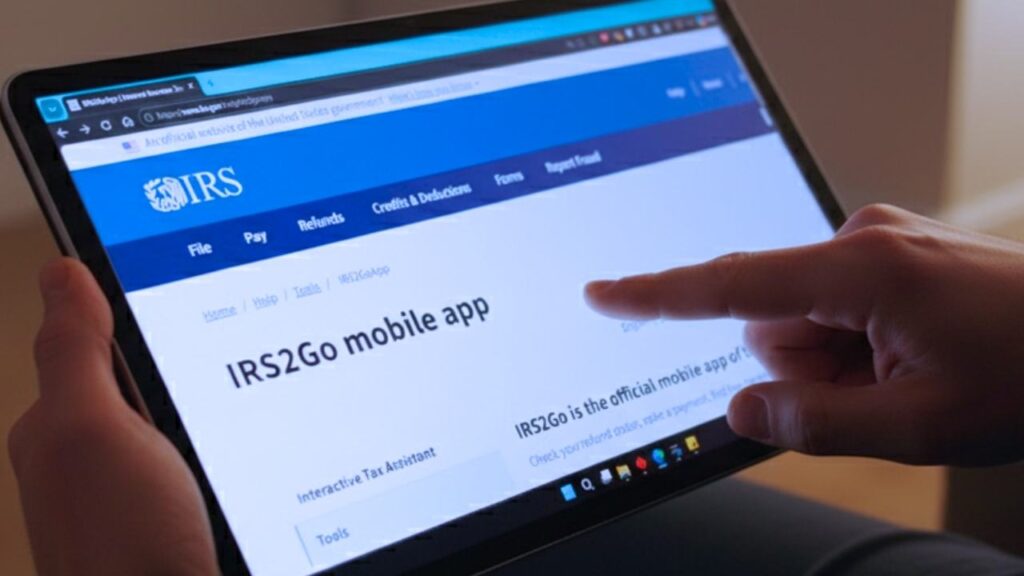
Tax season moves fast… until it doesn’t. Millions of Americans file their returns in February and March expecting a tax refund within weeks, only to find themselves refreshing their bank account with no answer in sight. If that sounds familiar, the good news is that the Internal Revenue Service (IRS) gives you a direct line to find out exactly where your money is.
Tracking the status of a tax refund is straightforward with the Where’s My Refund? tool, available on the IRS website and through the IRS2Go app. Taxpayers can start checking their refund status within 24 hours after an e-filed return is received. For anyone who mailed a paper return, the wait before the tool reflects anything is longer — about four weeks before the system picks it up.
The tool doesn’t just give you a vague “pending” message. It also provides a personalized refund date after the return is processed and a refund is approved. That date is what you should be watching.
Step 1: Go Directly to the IRS Website or Open IRS2Go
Skip the third-party tax prep websites, because their trackers redirect you to the same IRS data anyway. Both the official IRS site and the IRS2Go mobile app are free, available around the clock, and pull from the same database.
To use Where’s My Refund?, you need three pieces of information: your Social Security number or Individual Taxpayer Identification Number (ITIN), your filing status, and the exact whole dollar amount of your expected refund. That last part trips people up. Round up or down by even a dollar and the system won’t match your return.
Step 2: Read the Three-Phase Tracker Carefully
The tool’s tracker displays progress in three phases. The first confirms the IRS received your return. The second means your return is being reviewed and approved. The third signals the refund is on its way — either as a direct deposit to your bank account or as a paper check headed to the address on file.
When the status changes to approved, the IRS is preparing to send the refund either as a direct deposit or by mail. At that point, your bank’s processing time is the last variable. Most institutions post deposits within one to two business days, though weekends and federal holidays can push that window.
Step 3: Don’t Call — the Phone Line Has the Same Information
This is worth repeating because it runs counter to the instinct to pick up the phone and demand answers. Calling the IRS won’t speed up a tax refund. The information available on Where’s My Refund? is the same information available to IRS phone assistors. The automated refund hotline is 800-829-1954 if you genuinely can’t access the online tool, but expect wait times — especially between February and April.
Why Refunds Get Delayed: The Main Reasons
Most delays aren’t random. Common reasons include forgetting to sign the return, making a math error, claiming the Earned Income Tax Credit — which by law is held until mid-February to prevent fraud — or claiming the Additional Child Tax Credit, which requires more review time.
There are also financial holds that catch filers off guard. If you have an outstanding tax balance, some of your refund may be automatically applied to that balance through the Treasury Offset Program. These balances can include past-due child support, federal and state debt obligations, or unemployment compensation debts. The IRS sends a notice by mail when this happens, but the notice often arrives after the fact.
How Long Is Too Long to Wait for a Tax Refund
The IRS generally issues refunds within 21 days of when you electronically filed your return, and longer for paper returns. If you’re past that window and the tracker is still showing “received” without advancing, it usually means your return was pulled for additional review — not necessarily an audit, but a closer look. In that case, wait for a written notice from the IRS before taking any action.
The IRS updates the tool once a day, usually overnight, so there’s no point checking multiple times a day. Check in the morning, note the status, and move on. Refreshing every hour changes nothing and costs you time you don’t need to spend.