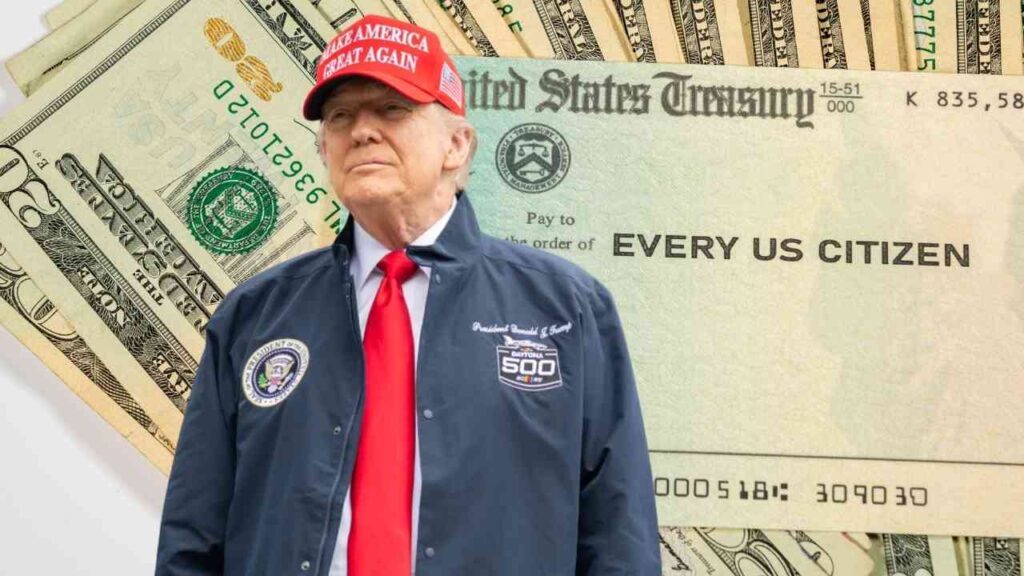
The figure resonates with a tempting simplicity: a $2,000 stimulus check for every eligible American. A promise that, from the mouth of President Donald Trump, has found a new timeline for its materialization: the year 2026.
However, behind the sensational hook of direct economic relief lies a tangle of financial uncertainty, legislative obstacles, and a fundamental question that economists are quick to ask: where will the money for the millions of stimulus checks actually come from?
Where Will the Stimulus Funds Actually Come From?
The official narrative, repeated at public events and cabinet meetings, appeals to a seemingly straightforward logic. Trump maintains that the trillions of dollars raised through trade tariffs imposed during his administration and currently defended have created an unprecedented cushion of public funds.
This surplus, he argues, should not be diluted within the vast federal budget, but rather returned to its “rightful owners“: low- and middle-income American taxpayers. Treasury Secretary Scott Bissent has attempted to define a beneficiary profile: households with annual incomes of $100,000 or less. The vision is painted as epic: “the greatest tax refund season in history.”
The Year Your Bank Account Could Get a Shock (Or Letdown)
But in Washington, the promises run up against the sting of numbers. A cold, meticulous analysis by the Tax Foundation has deflated the initial optimism. Its economists have done the math.
A universal $2,000 check for the population that meets the income criteria would have an astronomical cost, estimated at between $280 billion and $607 billion.
The conclusion is unsettling and undermines the core of the proposal: tariff revenues, however substantial, don’t come close to that magnitude. Funding such a program with that specific source is, in the words of several analysts consulted, “an exercise in budgetary fiction.”
What the IRS Says About the Plan
The skepticism isn’t just a matter of accounting. Violet Jira, a reporter who has followed the dossier, summed it up with an accuracy that reflects the opinion of many in the halls of the Capitol: “There are a couple of factors at play that have made some people skeptical.”
The main factor has three letters: IRS. The Internal Revenue Service hasn’t issued any statements, guidance, or technical notices about the program. Its silence speaks volumes.
For a mass check to be issued, it requires not only a budget allocation but also a new law, passed by the House and Senate and signed by the sitting president. In the current political climate, which is likely to remain fractured in 2026 as well, the possibility of a bipartisan consensus to bring this particular initiative to fruition seems remote.
Paradoxically, the mechanism supposedly fueling the handout is the same one driving up the cost of living for potential beneficiaries. The list of products affected by global tariffs is a snapshot of the domestic economy: coffee, tea, bananas, avocados, clothing, sneakers, toys, furniture, washing machines, construction materials, pharmaceutical components, and, significantly, cars manufactured abroad.
This situation places the average citizen in a perverse dynamic: they pay a silent surcharge on every purchase, hoping to receive, years later, partial compensation whose financial origin is questionable. Is this an incentive or a complicated reimbursement scheme?
Fiscal policy experts see this promise more as a powerful communication tool than a viable plan. It reignites the debate about the relationship between citizens and the state and the use of public funds, and positions its proponent as a fiscal savior. However, the absence of a concrete bill, the doubts of the business community, and the silence of the implementing agencies paint a picture where the illusion fades in the face of the reality of the procedures.