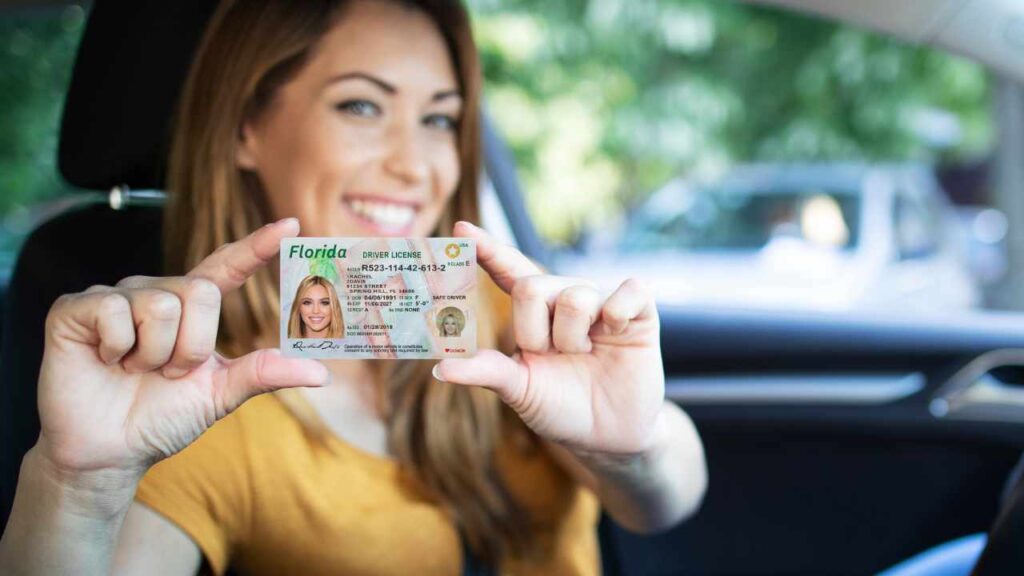
Across the United States, a driver’s license is far more than a permit to drive, because it works as your main ID for everyday life. Without one, it’s very hard to open a bank account, rent an apartment, enter federal buildings, vote in several states, or get health services.
It allows you to get to work, pick up your kids from school, go to the doctor, and move through your community safely and easily. Outside a handful of big cities, public transport is scarce or nonexistent. Driving isn’t a choice – it’s a necessity. LegalClarity notes that “in rural and suburban counties, the license is critical for accessing employment, medical care, education, and other essential parts of life.”
Since May 2025, the license has taken on a new federal role: the REAL ID standard is required for domestic flights. That rule is still in effect through 2026. So your driver’s license is now your key to air travel inside the country, too.
What happens if you drive without a license
There’s false information floating around on social media about supposed legal loopholes for driving without a license. The truth is simple: every state requires a valid license. ConsumerShield states clearly, “All states in the country require a valid license.” A White House memo from April 2025 ordered authorities to make sure “all U.S. drivers are validly licensed and qualified.”
The real-world consequences are serious and add up fast:
- Fines: Depending on state laws, fines typically range from about 50upto50upto5,000 for repeat or serious offenses. In the most extreme cases, they can hit $25,000.
- Jail time: Driving without a license is a misdemeanor in every state. ConsumerShield reports that “Illinois law allows up to one year in jail for anyone caught driving without a license.”
- Vehicle impoundment: Some states will seize your car to stop repeat offenses. For a first conviction, California can hold your vehicle for up to six months – and up to 12 months for later convictions.
- If you cause an accident: Your chances of arrest go way up. And the fallout affects your insurance rates, criminal record, and future driving privileges.
Repeat offenses get worse. Under Florida’s updated 2025 law, a second or later conviction for driving without a valid license is now an “enhanceable” offense. That means higher fines and possibly more prison time.
For foreign visitors. You can drive using your home country’s license for up to one year. After that, it’s no longer valid. You’ll need a U.S. license.
5 states where getting a license is easiest
License rules are set by each state, not the federal government. That creates big differences in how hard or easy the process is.
1. South Dakota – The easiest in the country
A study by the law firm Siegfried & Jensen ranked all states by exam difficulty – looking at manual length, number of questions, and driving test maneuvers. South Dakota came in last, making it the most direct route to a license. You can apply for a learner’s permit at age 14, the youngest in the nation.
The biggest advantage: if you complete a state-approved driver’s ed course, LegalClarity explains, “both the written knowledge exam and the practical driving test are waived for one year from the date you finish the course.” You just need a vision test, pay the fee, and you’re done. The written test allows up to 5 wrong answers. No parallel parking required.
2. Arkansas – No minimum supervised hours
According to IIHS graduated licensing data, Arkansas is the only state that doesn’t require a minimum number of supervised driving hours during the permit stage. Every other state asks for between 20 and 70 hours with a licensed adult. Arkansas also doesn’t require new adult drivers to complete any formal driver’s ed course before applying.
For anyone 18 or older, you start with a learner’s permit: government ID, Social Security number, two proof-of-residence documents, a vision test, and a written test with a minimum 80% score. No parallel parking on the driving exam.
3. Wyoming – The shortest waiting period in the country
LegalClarity notes that Wyoming “has the shortest mandatory permit holding period in the entire country – just 10 days.” After that, you can move to an intermediate license. The next shortest periods are around six months, which is the standard in about half the states. The written test allows up to 5 wrong answers. No parallel parking required.
4. Ohio – Most accessible for adults over 21
South Dakota, Ohio, and Arkansas have a reputation as the most accessible states, and the data backs that up. One recent change: starting September 2025, Ohio residents between 18 and 20 face stricter rules – they must complete a Class D driver’s ed program and log 50 supervised hours before the driving test.
Anyone 21 or older is unaffected. For over‑21s, the process remains one of the most straightforward in the country: basic documents (proof of identity, birth date, and legal presence), plus a vision test, an 80% written knowledge test, and a driving exam. No parallel parking required.
5. Iowa – The fewest supervised hours among states that require them
Iowa allows a learner’s permit at 14 and requires only 20 hours of supervised practice – one of the lowest numbers nationally. You can get an intermediate license at 16. The 50‑question written test allows up to 10 wrong answers, one of the widest margins in the country.
The permit holding period is 12 months, but that’s balanced by the very low supervised‑hour requirement – less than half of what Pennsylvania (70 hours) or Kentucky (60 hours) demand.