
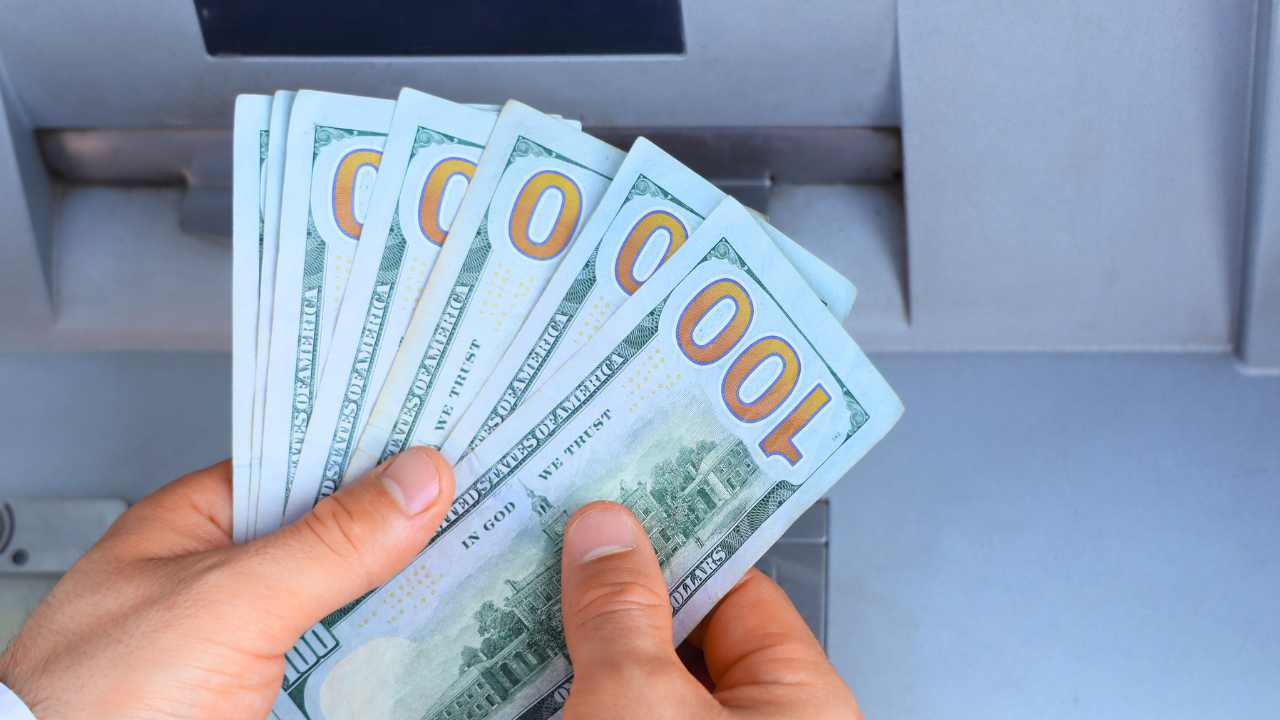
As the affordability crisis stretches into the new year, with everything from grocery bills and housing costs to health insurance premiums weighing on Americans, a financial windfall from the government would undoubtedly be welcomed by many: new rounds of stimulus checks.
Since returning to the White House for a second term, President Donald Trump has repeatedly floated the idea of granting a $2000 stimulus check or tax rebate to most Americans—a move he frames as sharing the dividends of what he calls his administration’s economic successes.


Trump has pointed to his global tariff regime as the rationale, asserting that revenue from the controversial levies can be returned to the American people, specifically those in “low- and middle-income households.”
Americans Are Waiting for a $2000 Stimulus Check
In a combative post defending his tariffs against ongoing criticism and legal challenges, Trump insisted in November that those opposing his trade policies are “fools” and that many Americans would soon benefit from the charges.
“We are now the richest and most respected country in the world. We are taking in trillions of dollars and will soon start paying down our massive debt… Record investment in the USA, plants and factories rising all over,” Trump stated.
“A dividend of at least $2000 per person (not including high-income individuals) will be paid to all.” The President did not specify who would qualify as “high-income” under his estimation.
The Current State of the Proposed $2000 Payments
He doubled down on the idea that Americans would soon see financial benefits during his Christmas address at the White House, boasting that 2026 would be “the greatest tax return season of all time.” But what is the actual status of this proposed dividend, and is there a detailed plan to make the payments a reality? Here is the latest.
On Monday, a White House official stated to news media that, in light of revenue collected from tariffs, the Administration remains “committed to leveraging this windfall for the American people and is exploring all options.”
This update describes sparse remarks made by White House Press Secretary Karoline Leavitt in November. When briefing reporters on the dividend’s status, Leavitt said that while there is no set timeline, “the President has made clear he wants it to happen, so his team of economic advisers is looking into it.”
Are $2000 Stimulus Checks Just a Bargaining Chip?
Adding to the vagueness of the dividend proposal, Treasury Secretary Scott Bessent, in an interview late last year, suggested the payment could come in “many forms.” “It could just be through the tax cuts we are seeing on the President’s agenda. No tax on tips, no tax on overtime, no tax on Social Security, car loan deductibility,” Bessent told ABC News in November.
Furthermore, in late December, when asked if Americans should expect to receive the $2000 check in 2026, the Director of the White House National Economic Council, Kevin Hassett, indicated it largely depends on “what happens with Congress.”
“Congress is going to have to appropriate that money to those people,” he told CBS. “I expect that in the new year the President will send a proposal to Congress to make that happen.” As of early January, no concrete plan of action has been presented to the public or detailed in legislative language.
Experts and Analysts Point to Significant Logistical and Political Hurdles
The scope of the proposed payment presents immediate questions. If the payment were made to Americans in low- and middle-income households, it could encompass over 80% of the total U.S. population—more than 274 million people, according to a Pew Research Center analysis. Financial experts and policy analysts have repeatedly raised logistical concerns about the sheer scale of the outlay and how it would be executed.
“I do not think it is a very realistic possibility, as lawmakers would have major cost concerns,” Ryan Cummings, Chief of Staff at the Stanford Institute for Economic Policy Research, told news media. He argued that the President cannot “unilaterally decide he is going to give away hundreds of billions.”
The ball appears to be in the White House’s court to formalize a proposal. Administration officials have signaled that a detailed plan may be included in the President’s budget request for Fiscal Year 2027, expected to be submitted to Congress in the coming weeks. That document would serve as the administration’s formal blueprint, kicking off the congressional budget and appropriation process.
For now, the promised $2000 dividend remains a rhetorical pledge without a legislative vehicle. American households awaiting relief will be watching to see if the promise transitions from campaign-style rhetoric into a concrete bill navigating the complex terrain of Capitol Hill. The coming months will be a critical test of the proposal’s viability, as the administration weighs its priorities against fiscal realities and a split Congress.