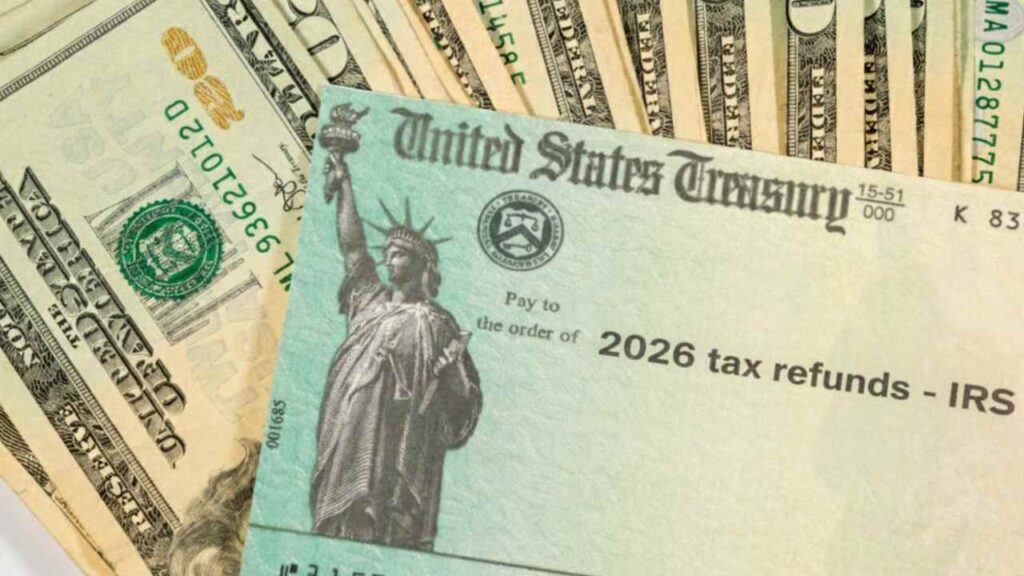
A historic tax season is looming. In the spring of 2026, millions of Americans will open their tax returns with surprise, finding refunds averaging nearly $4,000—the highest ever seen. Investment bank Piper Sandler predicts that IRS checks will be, on average, about $1,000 more generous than the previous year.
A windfall that, on the surface, seems cause for celebration. But behind this record figure lies a more complex and less celebratory reality: this isn’t a gift from the government, but rather a systemic mismatch that has been depriving taxpayers of their own money for months.
Extra Tax Refunds of Up to $4,000 Extra
The root of the problem dates back to July 4, 2025, when the sweeping “One Big, Beautiful Bill Act” (OBBBA) was signed. This far-reaching legislation rewrote key parts of the tax code retroactively for the entire fiscal year.
Among its most significant measures were increasing the Child Tax Credit to $2,200, creating a temporary $6,000 deduction for taxpayers over 65, and perhaps most impactfully, temporarily raising the State and Local Taxes Allowance (SALT) limit from $10,000 to $40,000.
However, this is where the first link in the chain of errors emerged. The Internal Revenue Service (IRS) failed to update the withholding tables that determine how much money is withheld from each paycheck in a timely manner. The result is that, throughout 2025, workers have been overpaying on every paycheck, as if the law that reduced their taxes had never existed.
The Truth Behind the Expected 2026 Tax Refund Boom
In essence, the average taxpayer has been lending an interest-free loan to the U.S. Treasury. The “benefit” promised by the OBBB Act didn’t arrive in the form of a higher take-home paycheck week after week, but rather accumulated in the government’s coffers to be returned in a single massive payment in 2026.
Tax experts are clear on this point: a large refund isn’t a gain; it’s a correction of an overpayment. It’s your own money, which has been out of your reach, coming back without having generated any return in your pocket. This enforced delay has a real opportunity cost, especially in an environment of persistent inflation where every dollar today is worth more than a dollar tomorrow.
Could We Celebrate Larger Tax Refunds?
If you see a little bit closer, it reveals a picture of winners and losers clearly defined by income level. Middle- and upper-middle-income households, particularly those living in high-tax states like California, New York, or New Jersey, are likely to see the most substantial increases.
For them, raising the SALT deduction limit is a tax saving grace, allowing them to recover a much larger portion of what they pay to their local governments. Furthermore, they fully benefit from the increased child tax credit. They are, without a doubt, the biggest beneficiaries of this unusual scenario.
At the other end of the spectrum, very high-income taxpayers will see limited benefit, as many of the new deductions begin to be phased out above certain income levels. But the most vulnerable group in this equation is low-income households.
For many, the anticipated record refund may not materialize or, in the worst-case scenario, may be accompanied by a reduction in other social benefits. Their often tight financial situation means they can least afford to have excess withholding throughout the year. For them, a lack of immediate cash is a more pressing issue than a large but late refund.