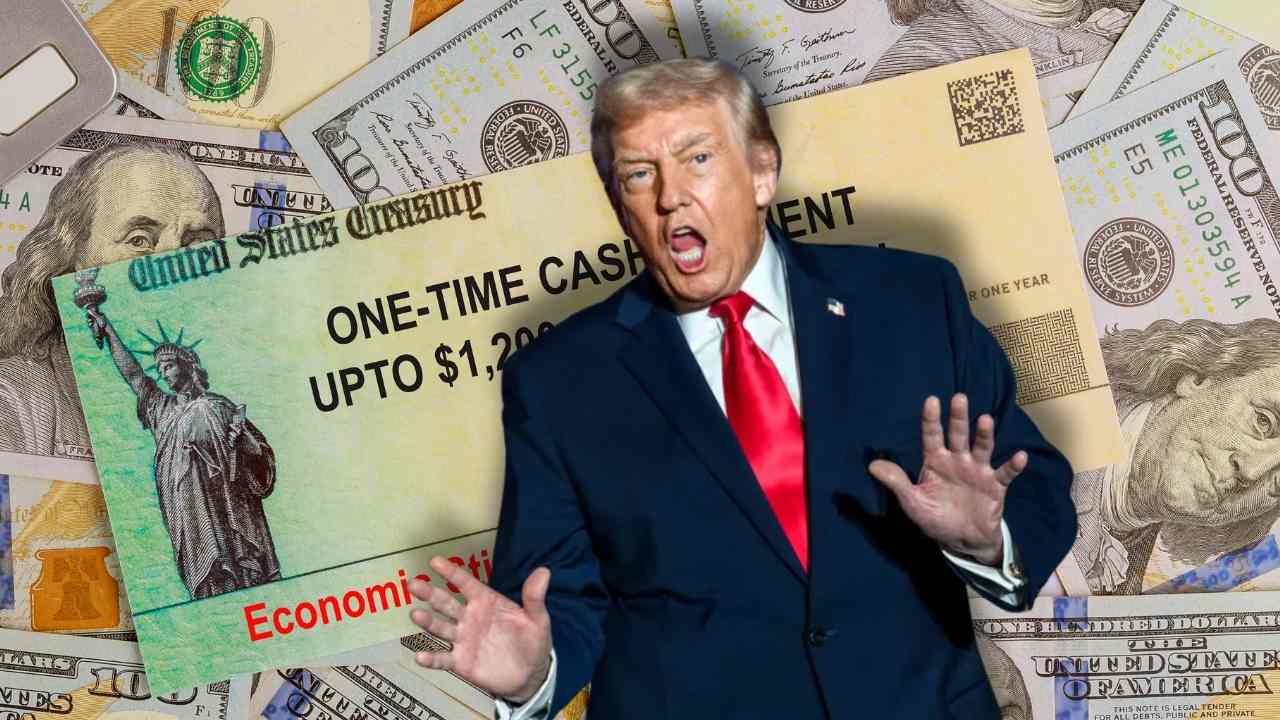
As tax season opens, a pressing question echoes beyond filing deadlines: will Americans see a $2,000 “tariff dividend” stimulus check from the Trump administration this year? The promise is explicit, repeated in interviews and on social media. The path to fulfilling it, however, is a political and legal labyrinth where bold proposals crash with constitutional limits, economic math, and a wary Supreme Court.
In a recent interview, President Donald Trump projected confidence about the checks, stating, “Well, I am going to – the tariff money is so substantial. That’s coming in, that I’ll be able to do $2,000 sometime. I would say toward the end of the year”.

The $2,000 Stimulus Check Everyone’s Talking About
This builds on his November pledge to issue a dividend “of at least $2,000 a person (not including high income people!)” from the revenue collected on imports. The political timing is conspicuous, with the administration suggesting checks could go out to “individuals of moderate income” sometime in 2026, ahead of the midterm elections.
Yet, the entire premise hangs by a legal thread. The Supreme Court is poised to rule on a pivotal case challenging the constitutionality of the tariffs themselves, imposed under the International Emergency Economic Powers Act.
A ruling against the administration could unravel the plan instantly, forcing the government to refund hundreds of billions of dollars to the importers who paid the tariffs.
Trump Wants the Stimulus Checks to Be Delivered, No Matter What
Trump himself has highlighted the stakes on social media, warning, “If the Supreme Court rules against the United States of America on the National Security bonanza, WE’RE SCREWED!” and arguing that refunding the money “would be a complete mess, and almost impossible for our Country to pay”.
Even if the tariffs survive the Court, a formidable arithmetic problem remains. Independent analysis from Yale University’s Budget Lab estimates a one-time $2,000 rebate for adults with incomes under $100,000 would cost approximately $450 billion.
This figure is nearly double the estimated $240 billion the administration’s tariffs are projected to raise in 2026. In short, the proposed dividend would vastly outstrip its intended funding source, potentially requiring massive new borrowing and increasing the national debt.
Betting Markets Are Placing Odds on Your Stimulus Check
First, the concept of a “tariff dividend” is not new. Senator Josh Hawley introduced the American Worker Rebate Act in 2025, proposing checks between $600 and $2,400. That bill, however, has stalled. The current proposal joins a list of direct payment ideas floated by the administration, including a “DOGE dividend” from a since-diminished government efficiency initiative and the already-distributed “Warrior Dividend” for service members.
For now, the American public is left weighing political promises against procedural and fiscal realities. Betting markets reflect profound skepticism, giving only a 2% chance a check arrives by March and only a 35% chance one materializes before 2027.
The journey from a campaign-style promise to a check in the mailbox requires navigating a gauntlet: a favorable Supreme Court, a cooperative Congress, and a financial equation that, for now, simply doesn’t add up. The only certainty is that any official announcement will come through established government channels, not an inbox filled with urgent demands to “act now.”