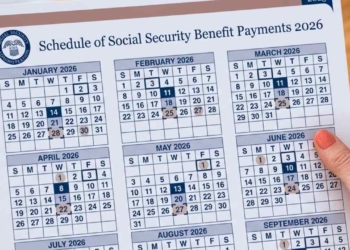

Millions of vulnerable Americans rely on Supplemental Security Income (SSI), and the start of 2026 brings an unusual sequence of bank deposits that could confuse even the most organized budgeter. Payments for January, February, and March will land weeks ahead of schedule.
This isn’t due to sudden government generosity but is dictated by the unwavering Gregorian calendar and the administrative rules of the Social Security Administration. This shift, far from a random occurrence, is a predictable event that demands careful financial planning to avoid hardship.


SSI Dates Changes: The Cause Is Purely Logistical
Social Security schedules SSI payments for the first day of each month. However, when that date falls on a weekend or a federal holiday, the agency issues funds on the last preceding business day. As you could imply, this long-dated policy, designed to ensure money is available on time, creates a domino effect on household cash flow.
The year 2026 is a textbook example:
- January 1st is a holiday, so the January payment was advanced to Wednesday, December 31, 2025.
- Then, February 1st falls on a Sunday, pushing that deposit to Friday, January 30, 2026.
- The pattern repeats in March, with its first day being a Sunday, moving funds to Friday, February 27.
This rhythm means recipients will see two deposits in January (the February payment) and then no new payment in March—a gap that can stretch over 30 days if not budgeted for carefully.
Maximum SSI payments in February
This chronological shift coincides with an increase in payment amounts. The 2026 Cost-of-Living Adjustment (COLA) was set at 2.8%, an increase intended to offset inflation.
Due to this COLA, the new maximum federal payment amounts, effective since December 2025, are now $994 for an eligible individual and $1,491 for an eligible couple. An “essential person,” someone who lives with and cares for an SSI recipient, may receive a maximum payment of $498.
Have in mind that you might not get these maximum figures. An individual’s net payment is often lower due to the calculation of “countable income,” which includes part of any wages, pensions, or in-kind support. Furthermore, many states add a supplement to this federal base, so the final amount varies by location.