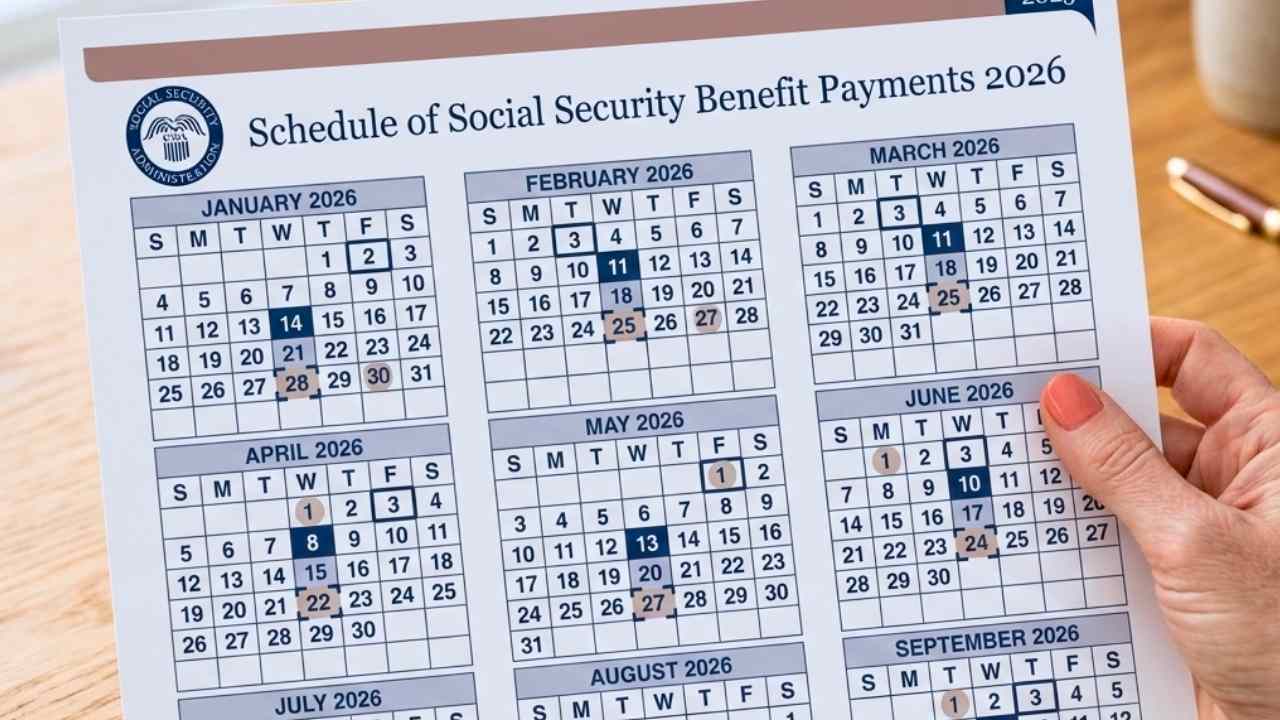
For millions of Americans who rely on Social Security, the March 2026 calendar brought a minor anomaly that prompted more than a few unnecessary calls to the bank: the Supplemental Security Income (SSI) check arrived on Friday, February 27, two days earlier than usual.
It wasn’t a mistake or a generous advance from the Social Security Administration (SSA). The reason was simply that March 1 fell on a Sunday, and the federal government doesn’t process payments on weekends. No mystery. No drama. Just bureaucracy.


Your March Social Security Payment Date Depends on Your Birthday
What there is something to celebrate this month is the amount. Thanks to the annual cost-of-living adjustment—the so-called COLA, which this year was 2.8%; the average retiree is receiving around $2,074 a month, about $56 more than in 2025. That’s not enough for extravagant luxuries.
In cities like Miami, Phoenix, or Los Angeles, that increase evaporates in the first week between rent and medication. But for many working-class households that depend almost exclusively on this income, the difference makes a real difference.
The remaining March payments followed the standard schedule the Social Security Administration has used for years.
- March 3 (Tuesday) — Beneficiaries who started receiving payments before May 1997, plus anyone receiving both Social Security and SSI
- March 11 (Wednesday) — Born between the 1st and 10th of any month
- March 18 (Wednesday) — Born between the 11th and 20th
- March 25 (Wednesday) — Born between the 21st and 31st
The SSA recommends that if the money doesn’t appear in your account on the expected date, you wait up to three business days before calling 1-800-772-1213. The initial explanation is usually with the bank, not in Washington.
Social Security Trust Fund Could Run Dry in 2032
Behind these one-off payments, however, lies a conversation that Congress has been skillfully postponing. The Congressional Budget Office recently projected that the Social Security trust fund could run out by September 2032.
From that point on, the program would only be able to pay out what it collects in real time, which would mean cuts of around 7% that year, and average reductions of up to 28% between 2033 and 2036. These are numbers that sound abstract until they are applied to a 70-year-old living alone in a two-bedroom apartment in Albuquerque.
Lawmakers from both parties know the issue is politically toxic. Talking about cutting Social Security is a sure way to lose votes among those over 60, who are by far the largest voting bloc in the United States. Talking about raising taxes to fund it also fails to generate enthusiasm on either side. The result is a comfortable silence that is slowly consuming the time available to act.