
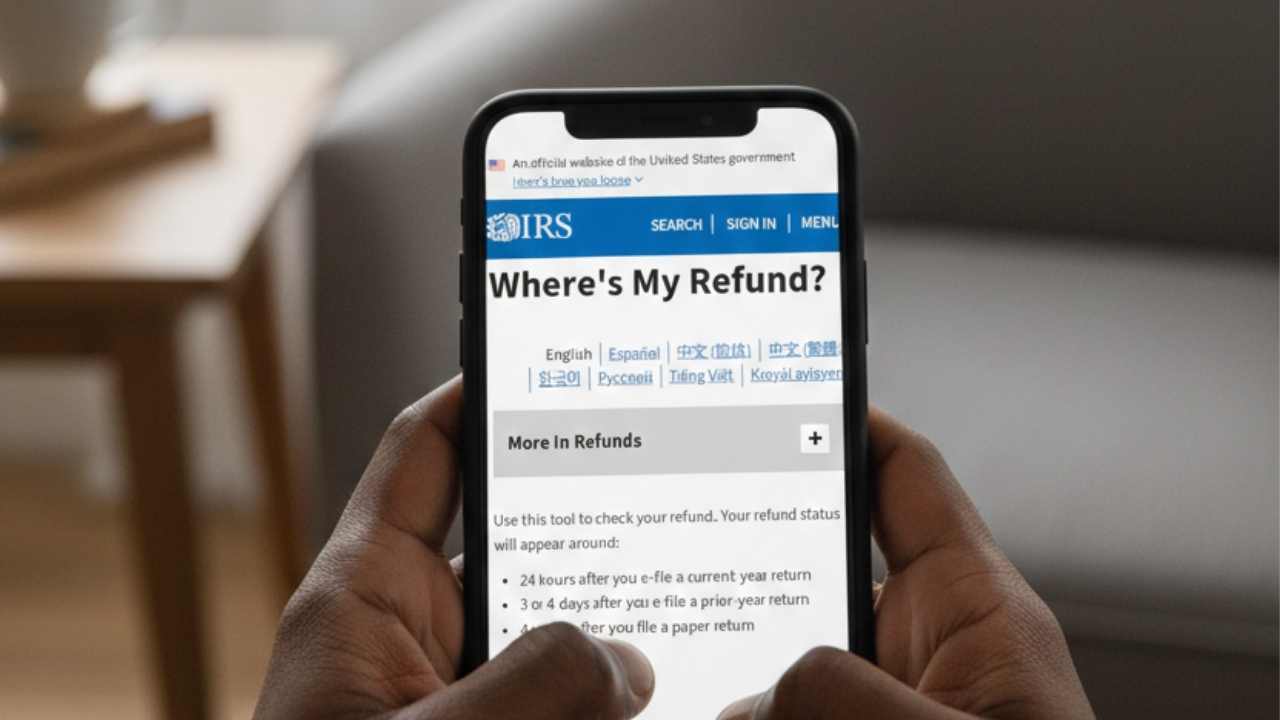
Every year, as February rolls around and millions of Americans (and quite a few residents abroad) have already filed their tax returns to the Internal Revenue Service (IRS), the same collective anxiety begins: Where on earth is my refund?.
That money you carefully calculated, that sometimes means paying off debts, fixing the car, or simply breathing a little easier. The IRS has a tool called “Where’s My Refund?” that promises clarity, but its messages can be frustratingly cryptic for those unfamiliar with bureaucratic jargon.


Today, I’ll explain, clearly and directly, what each status actually means and why the process sometimes seems to stall. Here we go.
Got the IRS “Processing” Message? Don’t Panic
The first thing to understand is that the IRS system works in three main stages, visible in its tracker. When you access the tool and see “Return Received,” the message usually says something like, “We received your return and are processing it.” Simply put, the government has your return and is processing it.
This is where that common word, “processing,” comes in. It doesn’t mean it’s stalled; rather, the systems and reviewers are cross-referencing data, verifying income reported by employers, checking credits, and looking for potential errors. This is the longest phase for many, especially if you filed on paper or are claiming credits like the EITC or child tax credit.
The “Processed” Message: Now You Get a Timeline
Once you pass that stage, the status changes to “Refund Approved.” This is what most people interpret as “processed”: the IRS has already reviewed everything, confirmed the amount is correct (or adjusted it), and approved the refund.
At that point, the tool usually gives you an estimated mailing date. This is a massive relief because it means the money is already on its way. It just needs to be released by the Treasury.
The final step is “Refund Sent.” At this point, the IRS has already processed your refund. If you chose direct deposit, it typically arrives in your account within one to five business days. If you opted for a check (which is becoming less common as the IRS phases out paper checks), it can take several weeks to arrive by mail.
What the “Still Being Processed” Message Means
But not everyone sees just these three clear messages. It’s very common to encounter a stressful phrase: “Your tax return is still being processed. A refund date will be provided when available.” This message doesn’t always indicate a serious problem.
Sometimes it simply means that a human reviewer needs to examine your case more closely: perhaps there’s a minor discrepancy, you’re claiming a credit that requires additional verification, or the volume of returns that week is simply very high.
In practice, most of these cases are resolved without the taxpayer having to do anything more than wait. The date appears when the status changes to “Approved.”
The 21-Day Time Frame for the IRS Tax Refunds
There are other less common but important situations. If you filed an amended return, the process is entirely separate and can take up to three or four months. If your refund is suddenly reduced, it’s likely that it was offset by outstanding debts such as unpaid child support, student loans, or state taxes. And yes, sometimes the IRS corrects errors on its own and sends you a notice explaining why your refund is different from what you expected.
The vast majority of those who file electronically and choose direct deposit receive their money in less than 21 days. Paper returns take considerably longer. The key to avoiding frustration is patience, checking the tool once a day (it updates overnight), and, above all, making sure you’ve entered your bank details correctly.