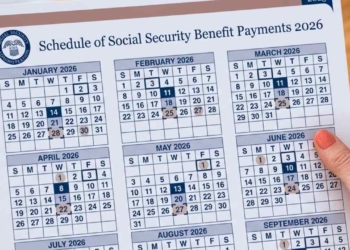

The Social Security payment schedule has implemented an unusual advance payment maneuver at the start of 2026, an administrative move that, combined with the annual cost-of-living adjustment, has generated a mix of confusion and early relief among the more than 7 million beneficiaries of the Supplemental Security Income (SSI) program.
This is not exactly a disruption to the SSI schedule, and far from being an error, is a predictable side effect of weekends and holidays, but its practical implications directly impact the precarious finances of the most vulnerable households.


Two January Deposits? The Truth Behind the SSI Confusion
Specifically, the payment for January 2026, which is traditionally issued on the 1st of that month, was deposited into beneficiaries’ accounts on Wednesday, December 31, 2025. This occurred because January 1, 2026, an official business day, fell on a Thursday and was a national holiday.
The law stipulates that SSI payments must be issued on the first preceding business day when the date falls on a weekend or holiday. However, the unusual aspect lies in what happens next.
February Will Be a Particular Month for SSI Recipients
The February payment, which would normally be due on Monday, February 2, is also brought forward. Since February 1 is a Sunday, the deposit will be made on Friday, January 30. As a result, recipients will see two payments within a 30-day period: one at the end of December and another at the end of January, but they will not receive any payment in February itself.
This situation, which the Social Security Administration (SSA) clarifies in its annual calendar, is often misinterpreted as an “extra payment,” when in reality it is a reorganization of the flow that requires careful budget planning by the beneficiary to avoid running out of funds during the long weeks of February.
New SSI Maximum Amounts for 2026
This shift in dates coincides with the implementation of the cost-of-living adjustment (COLA) for SSA programs, including, of course, the SSI. Since January, maximum benefit amounts have increased by 2.8%. For an eligible individual, the standard federal payment will rise from $943 per month in 2025 to $970 in 2026.
For a couple where both receive SSI, the maximum amount will increase from $1,415 to $1,455. These amounts, however, can be reduced by so-called “countable income,” which includes other sources of money, free housing, or food.