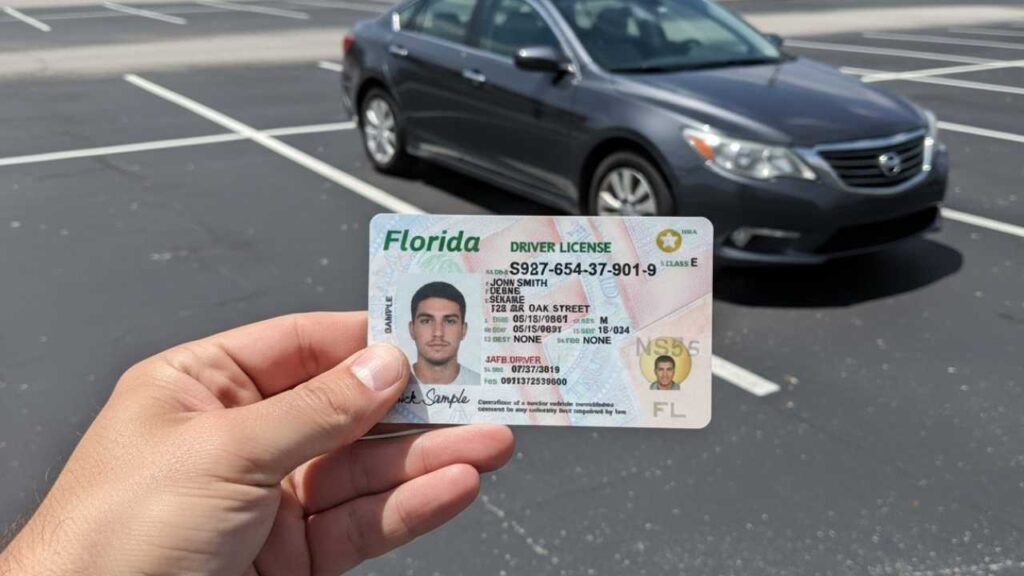
The Florida Department of Highway Safety and Motor Vehicles (FLHSMV) implemented a new regulation that alters the requirements for obtaining a non-commercial driver’s license. The policy, announced on January 30, 2026, went into effect on February 6, 2026.
Implementation was carried out as an administrative regulation by the department itself, exercising its existing statutory authority to administer the required evaluation tests. No new legislation from the state legislature was required to implement this change.
Florida Ends Non-English Driving Tests in New 2026 Policy Shift
The official justification for this measure, as detailed in the FLHSMV statement, focuses on road safety. The department argues that the change is necessary to ensure all drivers understand traffic signs, police officer instructions, and emergency information, which, according to the agency, are predominantly issued in English. The stated goal is to improve road safety in the state through this language standardization.
The announcement was made with a seven-day transition period between disclosure and the effective date. During that time, driver services offices, commonly known as DMVs, continued their normal operations under the previous rules. Information about the change was published on the official FLHSMV website and distributed to all examiners and local offices for uniform implementation.
Florida’s English-Only Driver’s Exam Affects Non-Anglophone Residents
The policy specifically affects all types of driving tests required for a Class E license. For the written or knowledge test, all printed versions in languages other than English have been eliminated. This includes the removal of materials in at least Spanish, Haitian Creole, Arabic, Chinese, and Russian, among other languages that were previously available. Applicants must now take this test exclusively in English.
Regarding the practical driving skills test, the new regulation prohibits the use of interpreters or translators during the test. The examiner will provide instructions and assess the candidate without the intervention of a third party interpreter. Similarly, the oral exam, when applicable, will be administered exclusively in English without any linguistic adaptations.
Furthermore, the policy does not change the requirements for commercial driver’s licenses (CDLs). These licenses are already subject to federal regulations from the Federal Motor Carrier Safety Administration (FMCSA) that require a certain level of English proficiency. Therefore, the change is limited to regular driver’s licenses for personal use.
Consequences Are Now Manifesting
In the lead-up to the rule’s implementation, a significant operational response was recorded. On February 5, 2026, the day before the change, an exceptionally high influx of applicants was observed at DMV offices throughout Florida. Many people came with the goal of taking or completing their exams in other languages before the transition period established by the department expired.
The practical consequences of this measure are direct for a segment of the population. It affects legal Florida residents over the age of 16 who need to obtain, renew, or replace a driver’s license and who do not speak English fluently enough to pass a technical exam. This creates an administrative barrier for individuals who, while potentially safe drivers, are not English speakers.
This barrier can translate into reduced mobility for these individuals, impacting their ability to commute to work, access medical services, shop, or fulfill family obligations. Analysts outside the department have pointed out that the policy could increase the incentive to drive without a license, with the resulting legal risks and problems with insurance coverage.
What Happens in the Rest of the US With Drivers Licence Tests?
The federal legal framework does not mandate that driving tests for non-commercial driver’s licenses be conducted in English. Florida’s measure is a state-level decision. With this action, Florida joins a small group of states with similar language policies for driver’s licenses, such as Georgia, which implemented a comparable rule in 2024, and Iowa, which did so in 2025. Most U.S. states continue to offer the written test in multiple languages.
There are potential legal challenges associated with this policy. Advocacy groups could file legal challenges based on the 14th Amendment’s Equal Protection Clause or on arguments of national origin discrimination. However, in other state jurisdictions, courts have upheld similar policies, citing road safety as a compelling state interest justifying the measure.
The FLHSMV has indicated that it will monitor various metrics following implementation. A key measure will be the change in the total number of new driver’s licenses issued in subsequent quarters. In addition, economic effects could be observed, such as a potential reduction in license fee revenue and an impact on employment sectors that rely on drivers.