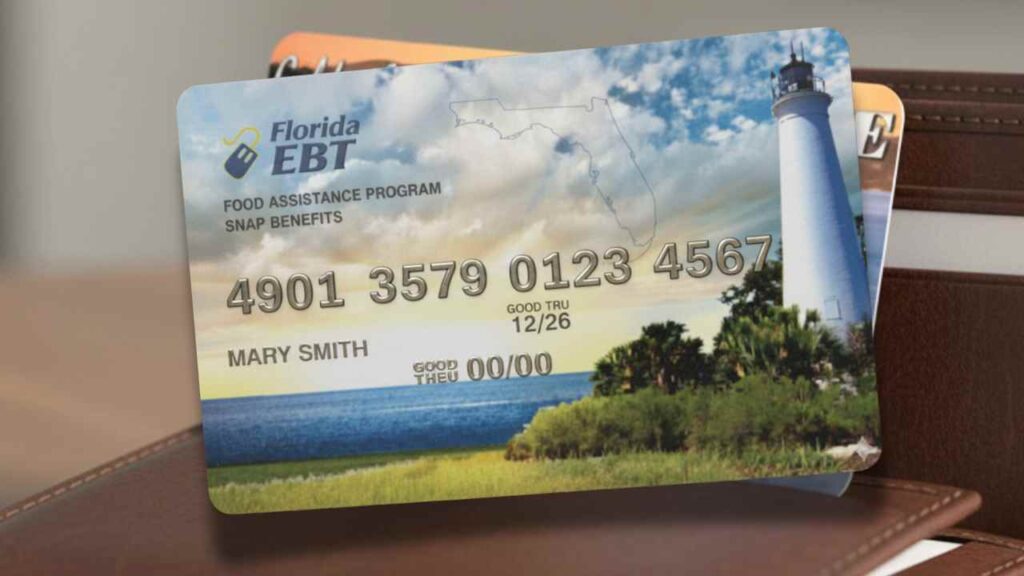
Every month, a quiet countdown begins in over three million Florida households. The ticking clock isn’t for a holiday; it’s for the crucial deposit of Supplemental Nutrition Assistance Program (SNAP) benefits, what many still call food stamps. That deposit, landing between January 8th and 28th in 2026, isn’t just a number in an account.
For a fifth of the state, SNAP benefits are main road to the grocery store, a lifeline dictated by the unfeeling digits of a government case number. What looks like a simple bureaucratic schedule is actually a fragile and complex dance of survival, constantly swayed by policy shifts and the harsh winds of the economy.
Florida’s SNAP Benefits System
So, who holds the strings to this essential safety net? The operation runs out of the Florida Department of Children and Families (DCF), specifically its Office of Economic Self-Sufficiency. Their job is to vet applications and distribute aid, but the real story is in who qualifies.
We’re talking about the state’s essential workers clocking in for minimum wage, whose paychecks vanish on rent alone. We’re talking about elderly neighbors trying to stretch a fixed pension and single parents choosing between a car repair and a full fridge.
To even get a SNAP card, these Floridians must prove their gross income sits below a strict ceiling—130% of the federal poverty line. It’s a bar that keeps inching higher with inflation, leaving many wondering if they’ll still clear it in 2026.
SNAP Benefit Payments in Florida: The January Schedule
The date on which benefits appear on the beneficiary’s EBT card is not random, but the result of a formula: the last two digits of the case number, read in reverse order, assign each household a window of 20 possible disbursement days. This system, designed to avoid overwhelming businesses and the banking infrastructure, has a profound human impact.
For a young single mother in Liberty City, Miami, for example, whose ID number ends in 73, knowing her funds will arrive on January 21 allows her to plan her children’s school meals two weeks in advance. For a retiree in Pensacola with the digit 28, receiving payment on the 9th of the month means being able to take advantage of the fresh meat deals at the beginning of the month, before they run out. And so on, for all 3 million monthly payments made by the program.
Standard SNAP Payments in FL (1st – 28th of each month)
| Case digits (9th and 8th) | Benefits available on the day… |
| 25-27 | January 8 |
| 28-31 | January 9 |
| 32-34 | January 10 |
| 35-38 | January 11 |
| 39-41 | January 12 |
| 42-45 | January 13 |
| 46-48 | January 14 |
| 49-53 | January 15 |
| 54-57 | January 16 |
| 58-60 | January 17 |
| 61-64 | January 18 |
| 65-67 | January 19 |
| 68-71 | January 20 |
| 72-74 | January 21 |
| 75-78 | January 22 |
| 79-81 | January 23 |
| 82-85 | January 24 |
| 86-88 | January 25 |
| 89-92 | January 26 |
| 93-95 | January 27 |
| 96-99 | January 28 |
Other Food Assistance Programs
If you receive SUNCAP benefits (for people who also receive SSI) or cash assistance (TANF), your schedule is different. These payments are made only during the first three days of each month, using a different logic based on your case number.
The maximum aid amounts for 2026, adjusted for inflation and announced by the U.S. Department of Agriculture, offer moderate but insufficient relief. A family of four will be able to receive up to $994 per month, an increase that barely compensates for the cumulative rise in the price of basic foodstuffs like eggs, bread, and milk over the past two years.
Maximum SNAP Benefits in 2026
- Household Size 1: $298
- Household Size 2: $546
- Household Size 3: $785
- Household Size 4: $994
- Household Size 5: $1,183
- Household Size 6: $1,421
- Household Size 7: $1,571
- Household Size 8: $1,789
- Each Additional Member: +$218
The minimum benefit will rise to $24, a symbolic amount. Analysts agree that, while the adjustment is technically correct, the gap between the aid and the actual cost of a nutritious food basket remains, or even widens, in tourist regions like Orlando or the Florida Keys, where the cost of living is particularly high.