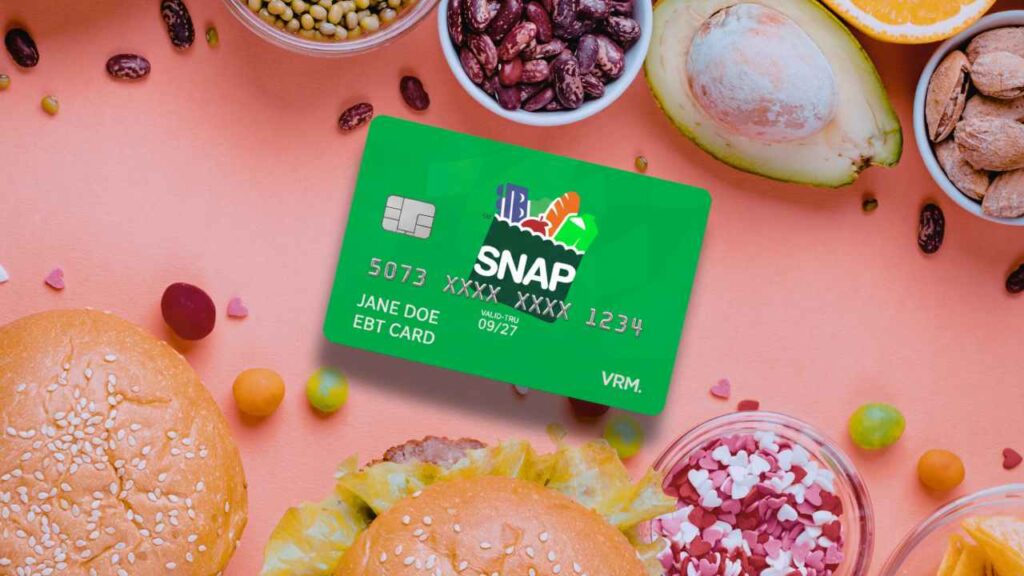
In a big portion of America, the diet of millions of low-income Americans is about to change: 18 states are preparing to implement, throughout 2026, historic bans on what can be purchased with the benefits of the Supplemental Nutrition Assistance Program (SNAP).
This wave of restrictions, authorized by the U.S. Department of Agriculture (USDA), marks the most drastic change in the program’s philosophy in decades: from subsidizing food choices to actively directing them toward what authorities define as “healthy”.
Beneficiaries will see the purchase of certain items on their SNAP EBT cards blocked, while it is debated whether this measure is a necessary step for public health or an act of paternalism that stigmatizes the poor.
SNAP under the philosophy “Make America Healthy Again”
The heart of this change beats in Washington, but its implementation is a patchwork of state-by-state efforts. The federal administration, under the banner of the “Make America Healthy Again” initiative, has empowered states to lead this reform. The official justification is clear: to restore the original nutritional purpose of SNAP and, in particular, to protect children’s health from the “dangers of highly processed foods.”
Officials argue that it is inconsistent for a public program to subsidize products epidemiologically linked to obesity, type 2 diabetes, and other chronic diseases that disproportionately affect low-income communities. “The goal is not to punish, but to correct a perverse incentive,” a USDA advisor recently stated. “Taxpayers should support nutritious food, not food that harms health.”
SNAP Changes: Not Everyone Is Convinced
However, critics, including food security advocates and some nutritionists, see the policy as deeply flawed. Their primary argument is its questionable effectiveness. “Banning soda in SNAP doesn’t address the root causes of poor nutrition: food deserts, lack of time to cook, and the relatively higher cost of fresh food,” notes Dr. Helena Marquez, a food policy researcher.
The second argument is that of stigmatization. For many, the hidden message is that poor people cannot make smart decisions for themselves and need the government to supervise them in the grocery store aisle.
“It’s moralism disguised as nutritional science,” says Michael Roberts, director of a community organization in Texas. “It creates two cash registers: one for those who pay with their own money and can choose, and another for those who use benefits and are under surveillance.”
Different Restrictions on SNAP Benefits Depending on the State
The practical implementation is as diverse as the country itself. Iowa has taken the most radical approach: instead of listing products, it will automatically ban any food subject to the state sales tax, a broad and bureaucratic category. Most states, like Florida, Louisiana, and Tennessee, opt for specific lists that typically include soft drinks, energy drinks, candy, and prepared desserts.
List of States with SNAP Restrictions in 2026
- Arkansas: Effective July 1st. Restrictions apply to soft drinks, fruit/vegetable beverages with <50% natural juice, and candy. This is a direct restriction.
- Colorado: Starting March 1st. Soft drinks are restricted. This is a direct restriction.
- Florida: Starting April 20th. Soft drinks, energy drinks, candy, and prepared desserts are restricted. This is a direct restriction.
- Hawaii: Starting August 1st. Soft drinks are restricted. This is a direct restriction.
- Idaho: Starting February 15th. Soft drinks and candy are restricted. It’s a direct restriction.
- Indiana: Starting January 1st. Soft drinks and candy are restricted. It’s a direct restriction.
- Iowa: Effective January 1st. All food items subject to IA Dept. Revenue taxes are restricted, except for food-producing plants/seeds. This is an indirect, tax-based approach.
- Louisiana: Since February 18th. Soft drinks, energy drinks, and sweets are restricted. It’s a direct restriction.
- Missouri: Effective October 1st. Sweets, prepared desserts, and certain unhealthy beverages are restricted. This is a direct restriction.
- Nebraska: Effective January 1st. Soft drinks and energy drinks are restricted. This is a direct restriction.
- North Dakota: Effective September 1st. Soft drinks, energy drinks, and candy are restricted. This is a direct restriction.
- Oklahoma: Starting February 15th. Soft drinks and candy are restricted. It’s a direct restriction.
- South Carolina: Starting August 31st. Candy, energy drinks, soda, and sweetened beverages are restricted. This is a direct restriction.
- Tennessee: Effective July 31. Processed foods/beverages (e.g., soda, energy drinks, candy) are restricted. This is a direct restriction.
- Texas: Effective April 1st. Sweetened beverages and candies are restricted. This is a direct restriction.
- Utah: Starting January 1st. Soft drinks are restricted. This is a direct restriction.
- Virginia: Effective April 1st. “Sweetened beverages” (broad definition) are restricted. This is a direct restriction.
- West Virginia: Effective January 1st. Soft drinks (soda) are restricted. This is a direct restriction.
New Maximum SNAP Amounts Effective in January 2026
The maximum SNAP benefit amounts for fiscal year 2026, set by the Cost-of-Living Adjustment (COLA), have been in effect since October 1, 2025. Benefits vary significantly based on household size and location, with higher allowances for Alaska, Hawaii, and U.S. territories due to their higher cost of living.
For example, in the 48 contiguous states and the District of Columbia, a one-person household can receive up to $298 per month, while the same household in rural Alaska can receive up to $598.
Allowances increase progressively with family size. A four-person household in the contiguous states receives a maximum of $994 per month. This same household in Hawaii can receive up to $1,689, and in Alaska’s Rural Zone 2, the amount reaches $1,995. For each additional household member, a fixed amount is added, which also varies by region, from $218 in the contiguous states to $438 in the most remote parts of Alaska.