A new form of federal payment is being prepared for American families, designed to look and feel like the stimulus checks that defined recent years of economic uncertainty. This time, however, the money isn’t for paying down debt or buying groceries.
These sort of stimulus checks are being deposited into a federally mandated long-term investment account for children, a program critics are already calling a political sleight of hand. The marketing is savvy, framing a complex wealth-building tool as a simple, direct stimulus check to win over a public weary of bureaucracy.


A New Stimulus Check Is Coming. It’s For Your Baby
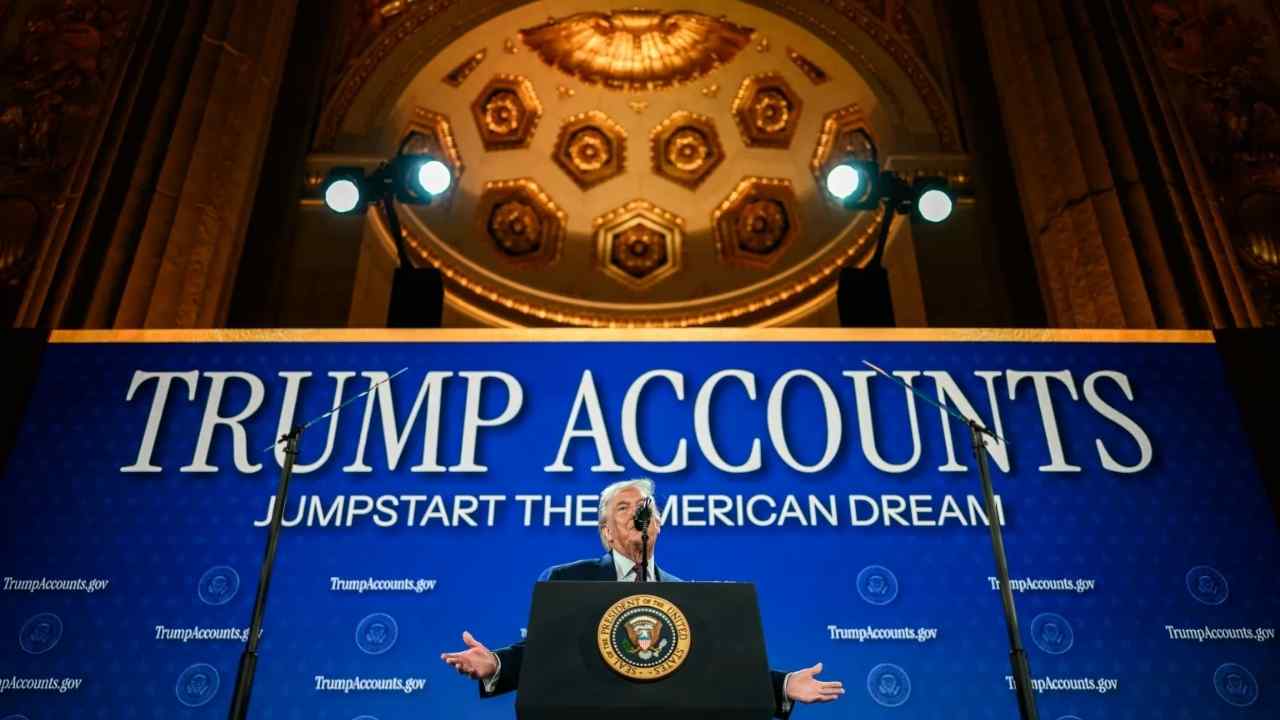
The program, formally the American Legacy Savings Account but branded in political circles as the “Trump Account,” authorizes a one-time $1,000 deposit for every child born in the United States between 2025 and 2028. The mechanism is straightforward, mirroring the automated payments of past economic impact payments.
“The deposit is automatic upon filing Form 4547 with the IRS,” a Treasury Department briefing document states. “It uses existing payment infrastructure to ensure seamless delivery.” This design is no accident.
“Politically, calling it a ‘baby stimulus’ is genius,” said Michael Laughlin, a political economist in Washington. “It triggers a familiar, positive association with free money. But economically, it’s the antithesis of stimulus. Stimulus is meant to be spent immediately to juice the economy. This money is designed to be walled off from the real economy for decades.”
Your Child’s Stimulus Check is Sitting in a Brokerage Account
The core tension lies in its restrictive architecture, because the account is irrevocably locked until the beneficiary turns 18. Unlike the Child Tax Credit (CTC), parents cannot access these funds for needs like childcare, medical bills, or urgent home repairs.
Withdrawals before age 59½ for purposes apart from a first-home down payment or college tuition incur steep penalties. “It’s a stimulus check with handcuffs,” said Sarah Chen, a policy analyst. “For a family in distress, knowing their child has $1,000 growing at 5% in a locked account is cold comfort when they face an eviction notice today. The program tells poor parents their immediate needs are less important than a future their children may never see if today’s crises aren’t solved.”
Your Newborn’s Stimulus Check Could Turno to $200,000
Proponents argue this forced patience is the program’s strength. “We are breaking the short-term cycle that plagues family finance,” argued billionaire investor and program advocate Ray Dalio. “This creates an asset base that cannot be stripped away by hardship. It’s not a cash handout; it’s a seed of capital.”
The program also innovates by allowing third-party contributions. Employers can match family deposits, and a pilot philanthropic fund will provide extra contributions for children in low-income zip codes. “This moves the needle from individual responsibility to a communal investment in the next generation’s capital,” Dalio added.
However, the promise of generational wealth hinges on a family’s ability to contribute beyond the government’s seed money. The often-cited projection of a $200,000 balance by retirement assumes monthly family contributions of over $400—a sum far unreachable for median households. “The math reveals the audience,” said Chen. “The locked structure benefits affluent families who can afford to max it out. For others, that $1,000 will remain a symbolic, stagnant token. It could wallpaper over the wealth gap while doing little to bridge it.”