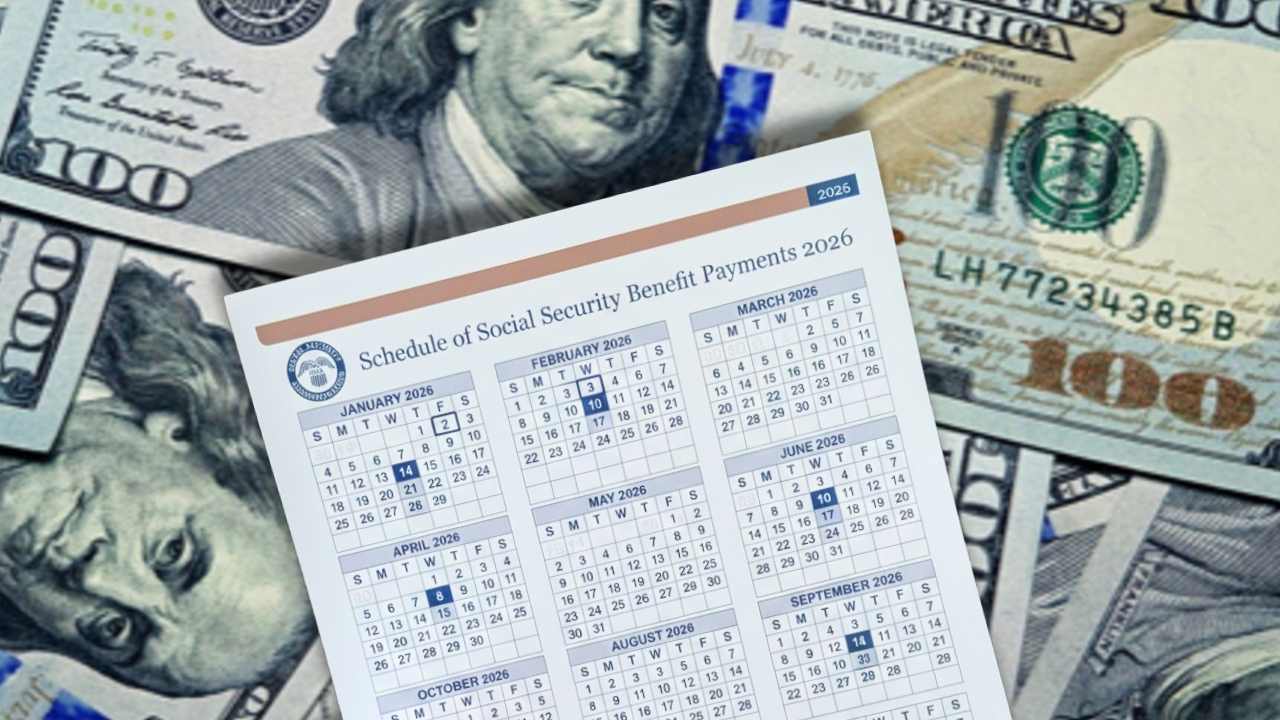
At first glance, the Social Security payment schedule for the first months of 2026 appears to be a mistake. A tangle of dates has sparked a wave of inquiries and concern among some of the country’s most vulnerable citizens: the more than 7.5 million beneficiaries of Supplemental Security Income (SSI).
The Social Security Administration (SSA) hasn’t changed the rules, there’s no extra bonus, and there’s no hidden cut. The explanation, as simple as it is easy to overlook, lies in an unchanged bureaucratic policy that clashes with the Gregorian calendar: when the first day of the month falls on a weekend or holiday, the payment is issued on the preceding business day. And in 2026, this coincidence occurs three times in a row, creating an unusual domino effect.
March 2026 Will Have No SSI Payment: It’s NOT What You Think
The phenomenon isn’t new, but its accumulation in a single quarter creates a palpable budgetary distortion. On Wednesday, December 31, 2025, beneficiaries will receive their payment for January 2026. The reason is that New Year’s Day, a federal holiday, falls on a Thursday.
The payment system must operate beforehand. Then, on Friday, January 30, 2026, the February funds will arrive, because January 1 is a Sunday. And the final blow: on Friday, February 27, 2026, the full March benefit will be deposited, since March 1 is also a Sunday.
The immediate and most significant consequence is that March 2026 will pass without the SSA issuing a single SSI payment. Recipients won’t see that money until Wednesday, April 1, when the cycle returns to normal.
Who’s Getting SSI Payments and How Much to Expect
Qualifying for SSI feels less like applying for a program and more like navigating a strict financial and medical gauntlet. Think of it as help for those who are truly in a tight corner: you need to be either 65 or older, blind, or have a disability so severe that working isn’t an option.
But here’s the catch that trips many people up—it’s not just about your health. Your finances are put under a microscope. For a single person, the countable resources generally cannot exceed $2,000, or $3,000 for a couple. Finally, you must be a U.S. citizen or a lawful resident who meets certain specific categories, and you must live in one of the 50 states, the District of Columbia, or the Northern Mariana Islands.
Even if you’re flat broke and meet the health rules, you’ve got to be a U.S. citizen or fall into a specific, narrow set of immigration categories. It’s a safety net, but the holes in it are deliberately small, designed only to catch those with almost nothing else to fall back on.
The numbers behind this timeline are significant. By 2026, a 2.8% increase is projected due to the Cost of Living Adjustment (COLA). This will raise the maximum individual federal payment to approximately $994 per month. For an eligible couple, the amount could approach $1,500.