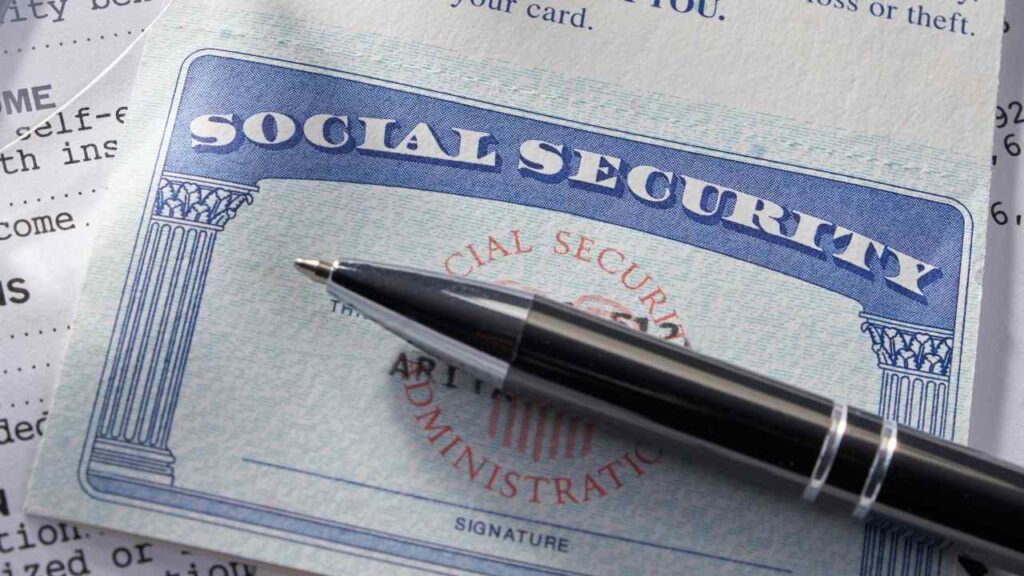
Millions of Americans who depend on Social Security benefits or Supplemental Security Income (SSI) will see their May payments land on four separate dates this month. Which date applies to any given person comes down to two things: what type of benefit they receive and, for most, the day of the month they were born.
The simplest case is SSI. Those payments go out on the first day of the month, every month. May 1 was a Friday, so that holds. No adjustment needed.
The trickier group is a smaller but significant one — people who started collecting Social Security before May 1997. They normally get paid on the 3rd. This month, the 3rd is a Sunday. That pushes their payment to Friday, May 1, the same day SSI goes out. The two groups end up on the same date for different reasons.
What happens when someone collects both SSI and Social Security
Anyone drawing both SSI and Social Security retirement gets two separate deposits. They do not combine into one. The dates differ, so both transfers need to be tracked independently.
For the bulk of current beneficiaries — everyone who enrolled after May 1997—payment timing is pegged to birth date. Three windows cover the entire month, all falling on Wednesdays.
Three Wednesdays of payments
Born between the 1st and the 10th: payment lands on the second Wednesday of the month, May 13. Born between the 11th and the 20th: third Wednesday, May 20. Born between the 21st and the 31st: fourth Wednesday, May 27. That structure covers retirement, SSDI, and survivor benefits alike, as long as enrollment came after the May 1997 cutoff.
The Wednesday system replaced an earlier model that sent all payments on a single date. The old approach created processing backlogs. Spreading disbursements across three weeks solved that operationally, though it created the two-tier system that still exists today — pre-1997 recipients on a fixed date, everyone else sorted by birthday.
Why the payment date moves when a weekend gets in the way
When a scheduled date falls on a Saturday, Sunday, or federal holiday, the SSA does not push the payment later. It moves it earlier, to the last business day before the conflict. That rule applies uniformly. Payments are never delayed into the following week under the standard calendar.
For direct deposit users, the funds typically clear on the scheduled date, though processing time varies by bank. The SSA recommends giving it three additional business days before assuming something went wrong and calling the agency.
The 2026 COLA: Benefits increased
Every May payment in 2026 reflects the annual cost-of-living adjustment that took effect in January. This year’s figure is 2.8 percent. For a typical retired worker, that adds roughly $56 a month. The average monthly retirement check as of March 2026 sat at $2,079.49, per the SSA’s own snapshot data.
The adjustment applies across benefit types — retirement, SSDI, SSI — though SSI maximum amounts are calculated under a separate federal formula that accounts for living arrangements and other income.
Paper checks discontinued by the SSA
One thing changing in the background this year: paper checks are being phased out. Executive Order 14247 directed federal agencies, including the SSA, to move beneficiaries off physical mail payments. Anyone still receiving a paper check is being pushed toward direct deposit, which can be set up through the agency’s online portal by logging into a “my Social Security” account or by calling in directly.
The shift is framed as a cost-reduction move, because the physical check processing carries administrative overhead that electronic transfer eliminates.