
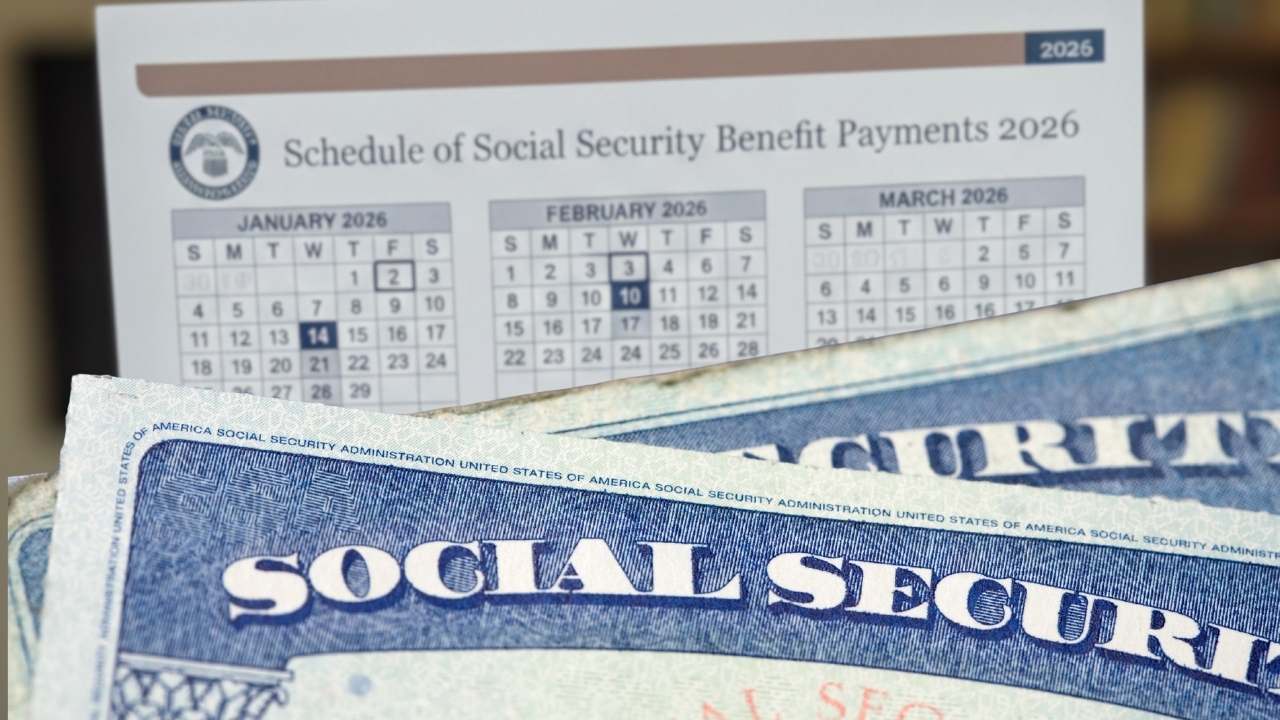
At the end of January 2026, the Social Security payment cycle culminates with the last disbursement of the month, a routine event that nevertheless encapsulates the complexities of the Social Security Administration’s (SSA) payment system, which must deliver funds to more than 66 million Americans who receive its benefits.
On Wednesday, January 28, Social Security beneficiaries whose birthdays fall between the 21st and 31st of any month will receive their payment. This cohort, roughly one-third of the more than 66 million beneficiaries across all groups, represents the latest group to receive their payments under the tiered distribution system implemented in 1997.
January Social Security Payments That Have Already Been Sent
This January payment schedule has followed its usual pattern. Those born between the 1st and the 10th received their payment on Wednesday the 14th. Those with birthdays between the 11th and the 20th received theirs on January 21st. A historical group – those who began receiving benefits before May 1997 – was served on January 3rd, a vestige of the previous system.
The separation is so rigorous that even the Supplemental Security Income (SSI) program, for the most vulnerable, was paid separately on the first day of the month, which was a Thursday.
When Are the February SSA Payments Due?
Looking ahead to February, the pattern repeats itself with the inflexibility of an algorithm: payments will arrive on the 11th, 18th and 25th, following the same birthday criteria, following the same logic (for those post-1997): on the second, third, and fourth Wednesday, in the same order as in January and practically in every month for more than 30 years.
- February 11: Birthdates 1st-10th.
- February 18: Birthdates 11th-20th.
- February 25: Birthdates 21st-31st.
- Pre-1997: beneficiaries receive on February 3, and SSI on February 1.
Maximum Amounts to Expect in January and February
The projected figures for 2026 offer a clear answer based on each beneficiary’s contributions, as well as other met conditions. A worker with a 35-year peak earnings history can expect a monthly benefit of $5,181 if they claim at age 70.
Those who retire at the full retirement age (FRA), which for more recent generations is 67, would receive up to $4,152. Choosing to retire at age 62 results in a significant reduction, limiting the maximum to $2,969.
All these figures are impacted by the cost-of-living adjustment (COLA), an increase based on last year’s CPI-W consumer price index: a 2.8% increase was approved with the aim of ensuring that SSA beneficiaries do not lose purchasing power in the face of inflation.
The gap between the maximum benefit and the average benefit—which hovers around $1,800—reveals the profound inequality that the program, despite its progressive design, reflects in the labor market. A maximum of $5,181 is a distant figure for a cashier, a teacher, or a construction worker, whose benefits are calculated on wages well below the contribution threshold.