
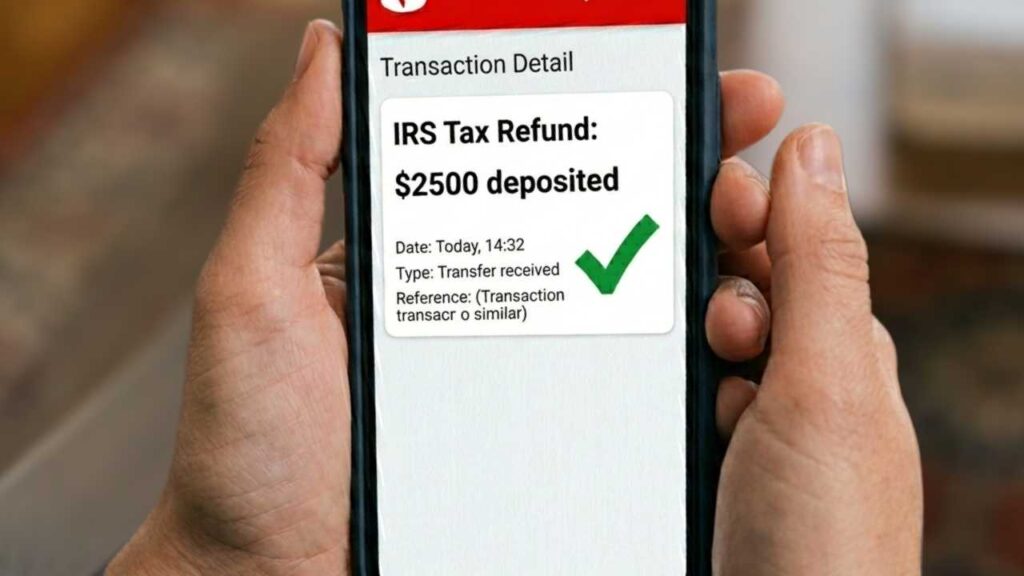
Since September 30, 2025, American taxpayers expecting a physical check for their tax refund have faced an uncomfortable reality: the yellow envelope from the Treasury is no longer arriving. Don’t worry, your money is not lost; it’s just a change to modernize the federal payments system.
Executive Order 14247, signed by Donald Trump in March of that year, eliminated paper checks as the standard payment method. And the numbers speak for themselves.
As of March 20, 2026, the Internal Revenue Service had processed 57 million refunds. Of those, “more than 98% were issued electronically via direct deposit.” The check, that piece of paper that for decades represented April relief, became a bureaucratic exception.
The IRS just stopped sending tax refunds the old-fashioned way
The executive order states that “the Treasury Department must cease issuing paper checks as of October 1, 2025, to the extent permitted by law.” And the law, at least for now, permits it. Form 1040 hasn’t changed. The deadlines remain the same. What has changed is the delivery of the money.
For those who already have their bank details in the system, nothing new. Direct deposit takes “less than 21 days in most cases.” Mailed checks could take “6 weeks or more.” The efficiency gain is clear. But the problem arises when the taxpayer files without providing a routing number or account number.
The notice CP53E appears there
It’s a letter the IRS sends informing you that your refund is “temporarily frozen” until you provide direct deposit information or formally request a paper check. The notice directs you to add or update your bank details in your IRS online account. The deadline is usually 30 days. If there’s no response, “the IRS issues a paper check approximately six weeks later.”
The phone line 866-325-4066 is available, but with limited reach. According to the Taxpayer Advocate Service, “that line provides recorded explanations of the notice and the steps to follow, but it does not transfer calls to a customer service representative or allow you to enter banking information.” To update your information, the only way is through your online account at IRS.gov.
What if you don’t have a bank account?
Options exist, though they’re complicated. The IRS works with the Treasury Department, the FDIC, the National Association of Credit Unions, and US Bank to “provide resources to help open free or low-cost accounts, or establish alternative electronic payment methods, such as direct deposit to certain prepaid debit cards.”
For those who can’t access even that, 800-829-1040 remains the last resort: you have to ask a representative to adjust the payment method to paper checks.
Formal exceptions exist, but they must be requested. The IRS will send a letter requesting direct deposit information and explaining how to request an exception. If the taxpayer does not provide bank details or obtain an approved exception, “the IRS will hold the paper check for six weeks after the 2025 tax return is filed.”
Paper checks are 16 times riskier than digital payments
The reasons behind the change are stark and numerical. The IRS summarizes it this way: “Paper checks are more than 16 times more likely to be lost, stolen, altered, or delayed than electronic payments.” Furthermore, the operating cost to the government is much higher.
The amount at stake is significant. The average refund for the 2016 tax season, as of March 20, was $3,571. And more than 80% were issued in less than 21 days. The IRS expects to receive approximately 164 million individual tax returns by the April 15 deadline. The agency’s recommendation is simple: double-check your routing number and account number before filing your return. One mistake, and the process could drag on for weeks.
The status of your refund can be tracked in real time using the “Where’s My Refund?” tool.IRS.govThe IRS2Go app or an online individual account are options. Paper checks aren’t completely dead, but today they’re a rarity that must be fought for.