
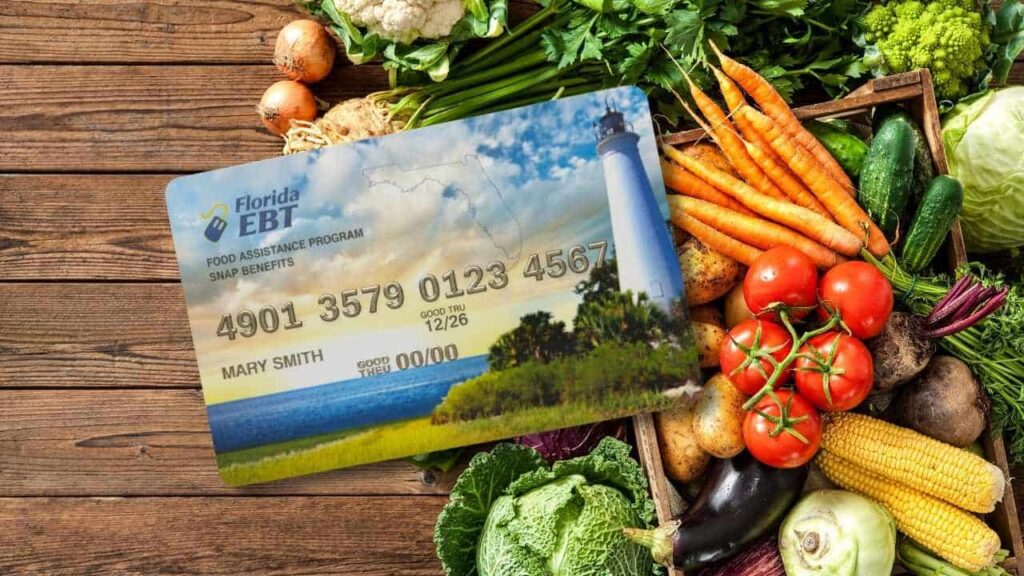
In Florida, more than 3 million people currently receive benefits from the SNAP benefits program, representing about 13% of the state’s population, and all receive their allocated amounts through an EBT card that works exactly like a credit card at SNAP-affiliated shops in Florida.
One payment is made per beneficiary per month, and any unused funds in a month are accumulated on the EBT card for the following month, so they are not immediately lost: they are automatically removed from the account if there is no activity for 274 consecutive days.
Florida SNAP Calendar in April 2026
Florida will distribute food assistance benefits between April 1 and 28, 2026, without changes to the usual schedule. However, this month brings a new development that sets the state apart from the rest of the country: the implementation of specific restrictions on which products can be purchased with the EBT card. In addition, there are changes stemming from federal legislation that modify who qualifies to receive benefits.
Each household receives its funds according to the eighth and ninth digits of its ten-digit case number, read from right to left, discarding the last digit. This staggered system distributes deposits throughout the month to prevent overloading the processing system. Funds become available starting at midnight on the corresponding day.
Those receiving cash assistance through TANF and those enrolled in the SUNCAP program—which includes those receiving Supplemental Security Income—have a separate payment schedule. Their payments are concentrated in the first three days of the month, also based on case number, and do not extend to the rest of the month.
How to verify the deposit date
To find out the exact date, the beneficiary must identify the corresponding digits in their case number. This information is available on notices issued by the state Department of Children and Families, on the MyACCESS portal, or by calling the customer service hotline.
Your exact payment date is determined by the 9th and 8th digits of your Florida case number, read backwards:
The amounts effective in April 2026 correspond to the cost-of-living adjustment for the 2026 federal fiscal year, which began on October 1, 2025. For a one-person household, the maximum allowance is $298. Two people receive up to $546.
Three people, up to $785. Four people, up to $994. Five people, up to $1,183. Six people, up to $1,421.
Right ahead, seven people, up to $1,571. Eight people, up to $1,789. For each additional household member, $218 is added to the maximum allowance.
Purchase restrictions in effect since April 20
The most distinctive element of April in Florida is the entry into force of thePurchase restrictions with EBTStarting April 20, 2026, SNAP beneficiaries in the state will no longer be able to use their cards to purchase sodas, energy drinks, candy, or ultra-processed packaged desserts. The measure is in effect for two years, until April 19, 2028, and was approved by the U.S. Department of Agriculture through a state exemption mechanism.
Florida is the first state in the country to implement these types of restrictions under this federal approval scheme. The scope of the prohibitions exceeds that of other states that also received similar authorizations. Unflavored sparkling water and fruit or vegetable juices remain eligible for purchase withEBT card.
The measure does not stem from state legislation passed by the Florida Legislature, but rather from a waiver request submitted by the Department of Children and Families to the USDA. This mechanism authorizes the state to operate a pilot program with rules that differ from the standard federal SNAP framework.
Changes in eligibility under federal legislation
In terms of eligibility, April 2026 also marks a turning point related to the phased implementation of the One Big Beautiful Bill Act, enacted on July 4, 2025. That legislation represents, according to various sources, the most extensive overhaul of the food assistance program in decades.
The requirements were significantly expanded. Adults aged 18 to 64 without children under 14 must demonstrate at least 20 hours of work per week or participation in job training programs to maintain benefits beyond a three-month period.
Three groups previously exempt from this requirement are no longer exempt: veterans of the armed forces, people experiencing homelessness, and former foster children under 24.
Starting April 9th, thenon-citizensThose who previously had access to SNAP under the humanitarian exemption category will lose that coverage. Only those who qualify under the stricter criteria established by the new regulations will be able to continue receiving benefits.