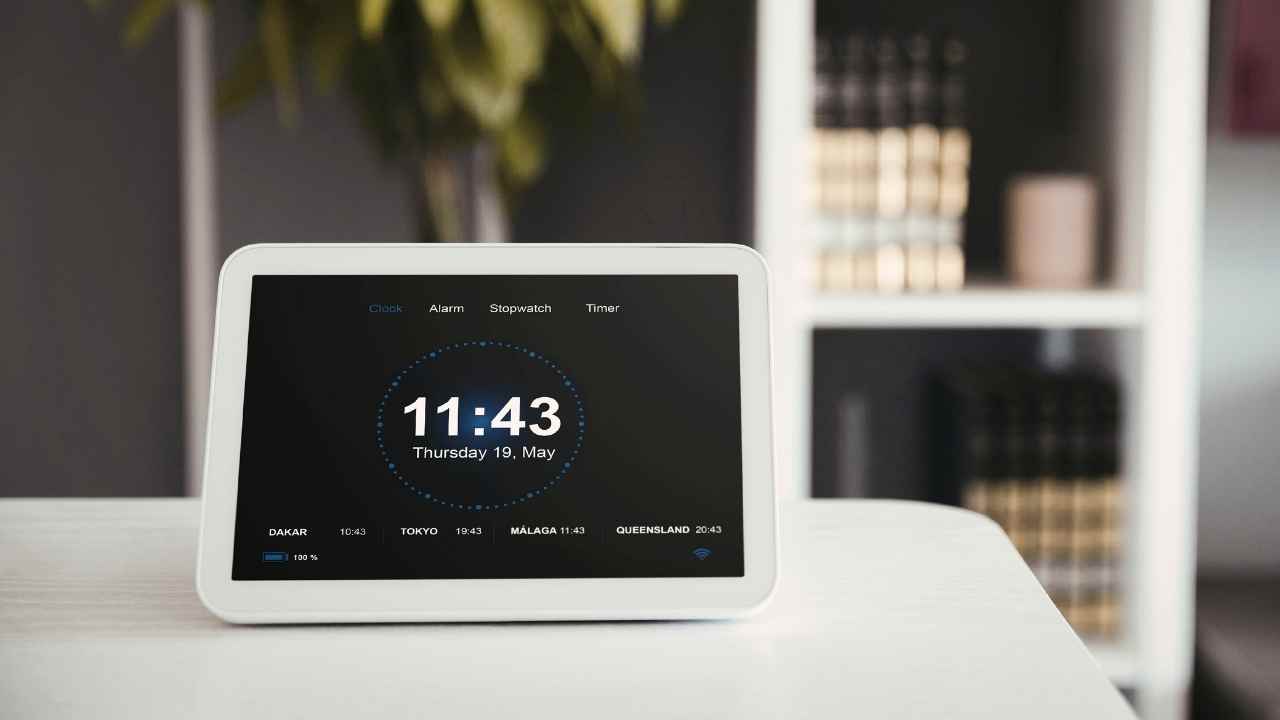
On Sunday, March 8, 2026, nearly every clock in the country will be moved forward one hour. It’s not an option, it’s Daylight Saving Time once again. It’s the automatic consequence of a federal law that has governed the daily rhythm of the United States for almost two decades.
End which in 2026 will be activated again with the same mechanism as always: at 2:00 a.m. on the second Sunday of March, the official time jumps forward to 3:00 a.m. The immediate result is simple: that night people will sleep one hour less.


Daylight Saving Time 2026: Get Your Clocks Ready
The rule is so old it already has its own slogan. “Spring forward, fall back” is the phrase generations of Americans learned to avoid confusion. In spring, clocks move forward; in fall, they move back. This year, the clocks go back on November 1st, when at 2:00 a.m. the clocks are set back to 1:00 a.m., and that hour lost in March is technically restored.
The legal framework that governs all of this is the Energy Policy Act of 2005, in effect since 2007, which established the second Sunday in March as the start of Daylight Saving Time and the first Sunday in November as its end.
What many people aren’t entirely clear on is exactly what to do. The answer largely depends on the type of device. Smartphones update the time automatically if they’re set to sync with the network. The same is true for computers connected to the internet.
Some Clocks Must Be Manually Adjusted
The problem arises with everything else: wall clocks, analog alarm clocks, ovens, microwaves, clock radios, car clocks. None of these devices change automatically. The practical recommendation is to make the adjustments on the night of Saturday, March 7th, before going to bed, not in the early hours of Sunday morning, to avoid confusion with alarms or early appointments.
There’s one thing that has become a daily ritual in the United States, coinciding with the time change: checking the batteries in smoke and carbon monoxide detectors. Fire departments across the country have used Daylight Saving Time (DST) as a biannual reminder for this check for years.
Detector manufacturers updated their recommendation a few years ago, suggesting checking devices every six months regardless of the time change, but the association between the two persists in the country’s everyday culture.
The Spring Forward DST Could Impact Your Sleep
For those who take medication at fixed times, the March change deserves special attention. A one-hour difference in taking certain medications can have real clinical consequences depending on the medication and the condition it treats.
The general medical recommendation is to adjust the schedule gradually in the days leading up to March 8, shifting the dose by 15 to 20 minutes each day, rather than making the abrupt change on Sunday.
The impact on sleep is well-documented, with enough evidence to warrant serious consideration. Jennifer Martin, former president of the American Academy of Sleep Medicine, described it with clinical precision: “The spring time change creates sleep deprivation on a societal scale.”
Studies support this characterization. Fatal traffic accidents see a temporary increase in the days following the spring forward, peaking on Monday mornings. The American Heart Association points to research linking the onset of springtime with an increase in heart attacks on the first Monday after the change, and in strokes during the following two days.
Sleep specialists recommend preparing in advance: going to bed 15 to 20 minutes earlier each night during the week before the change, getting exposure to natural light in the mornings of that first week, and reducing screen time in the evenings to help your biological clock adjust.
Daylight Saving Time 2026: Which States Don’t Have to Change Their Clocks at All
Not the entire country changes its clocks. Hawaii and Arizona, with the exception of the Navajo Nation within that state, do not observe daylight saving time. Neither do the territories of Puerto Rico, Guam, American Samoa, the Northern Mariana Islands, and the U.S. Virgin Islands. For residents of those places, March 8, 2026, is an ordinary Sunday.
The debate over whether Daylight Saving Time should exist remains open. A Gallup poll published in January 2025 found that 54% of Americans favor eliminating daylight saving time, a notable shift from the 73% who supported it in 1999. The Daylight Act of 2026, a proposal to advance clocks by 30 minutes once and never again, is currently circulating in Congress. It has not yet been passed. Until that happens, clocks will move forward on March 8, 2026.