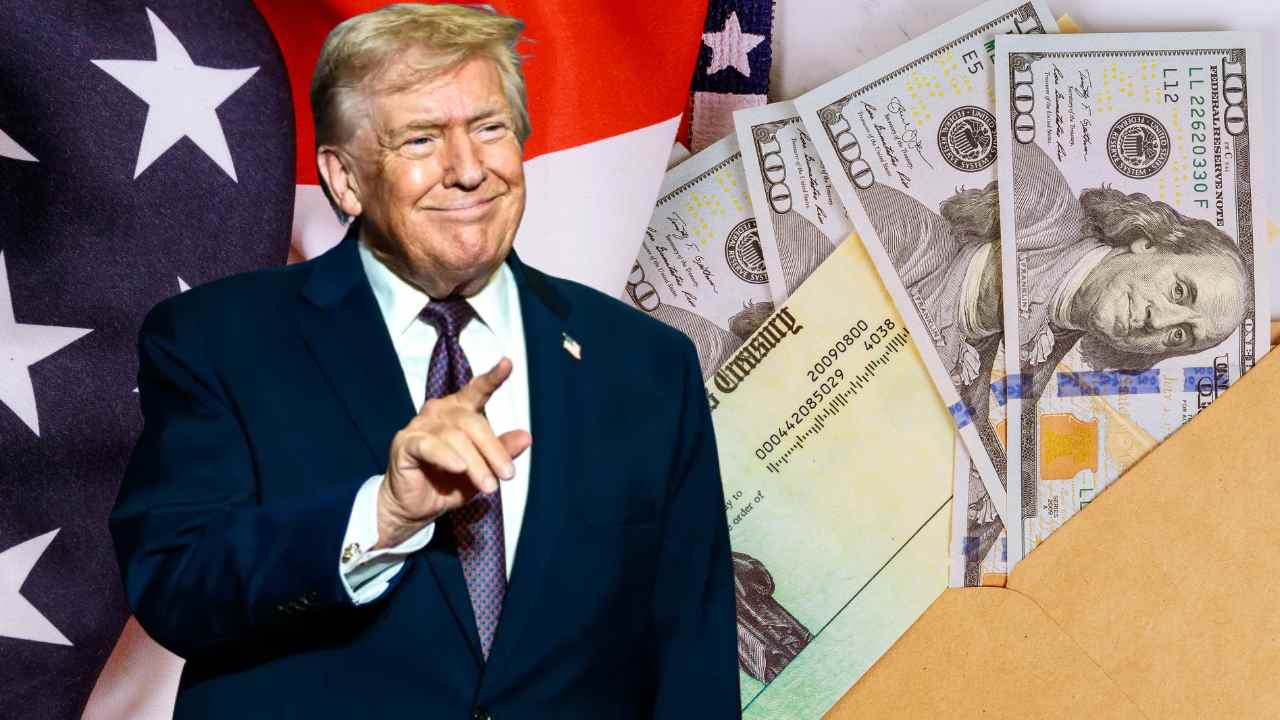
Do we have a date? Well, President Donald Trump has, according to his own statements, set a specific date for a promise that has resonated at his rallies since 2020: direct stimulus checks of $2,000 for Americans. These are not like the pandemic-era stimulus payments, because they’re funded differently.
In an exclusive conversation with a famous news media from New York, Trump asserted that the stimulus checks could begin to be distributed “toward the end of the year,” funded exclusively by tariff revenues and, in his view, without requiring congressional approval.
This claim, which raises constitutional and fiscal concerns, brings to the front a question: can a president, acting unilaterally, disburse federal funds in this manner?
From Tariffs to Your Wallet: The Path to the Stimulus Checks
The statement didn’t come out of nowhere. It’s the latest chapter in a long saga. Recall: at the end of last December, Trump surprised everyone by announcing a $1,776 “warrior dividend” for active-duty military personnel, a payment the Pentagon confirmed was made using Defense Department funds.
That gesture, celebrated on the bases, set an operational precedent in the president’s mind. Now, he’s extending that ambition to the general population. “Next year is projected to be the biggest tax refund season in history, and we’re going to give back the tariffs,” Trump stated, outlining a vision where the “trillions” collected in import taxes go directly back into citizens’ pockets.
A Promise No President Has Made: Stimulus Checks Without a Vote
However, budget law experts interviewed for this report are unanimous in their skepticism. The Constitution is clear: the power of the purse resides with Congress. Any significant disbursement of public funds requires legislative authorization.
Kevin Hassett, Trump’s former economic advisor, clarified on CBS News that, although there is “fiscal space” for such a measure, any concrete proposal would have to be submitted by the President and approved by Congress. “Congress decides ultimately,” he emphasized, in a statement that seems to contradict his former boss’s assertion of autonomy.
Trump’s Idea Does Not Explain One Thing
The mechanism proposed by Trump also hangs by a legal thread. The Supreme Court is currently reviewing the scope of the president’s tariff authority. An unfavorable ruling could dismantle the very revenue base on which Trump dreams of funding his paychecks.
Meanwhile, in the legislative arena, there is a concrete but stalled proposal: Senator Josh Hawley’s 2025 American Workers Cashback Act. This bill, which would distribute between $600 and $2,400 per family from tariffs, is languishing in the Senate Finance Committee with no sign of progress.
For now, there are no other stimulus checks scheduled or even announced, similar to those sent out during the pandemic to stimulate the economy during one of the most difficult times in American history.