
During the month of November, the CalFresh payments were particularly impacted by a partial federal government shutdown. This event temporarily disrupted federal funding and operations, causing great uncertainty about the distribution of nutrition assistance benefits, which are administered by the states but largely funded by the federal government.
Although the November CalFresh (or SNAP) benefits were eventually distributed in full, the process was chaotic and caused delays in some counties, leaving many recipients worried about being able to meet their food needs.
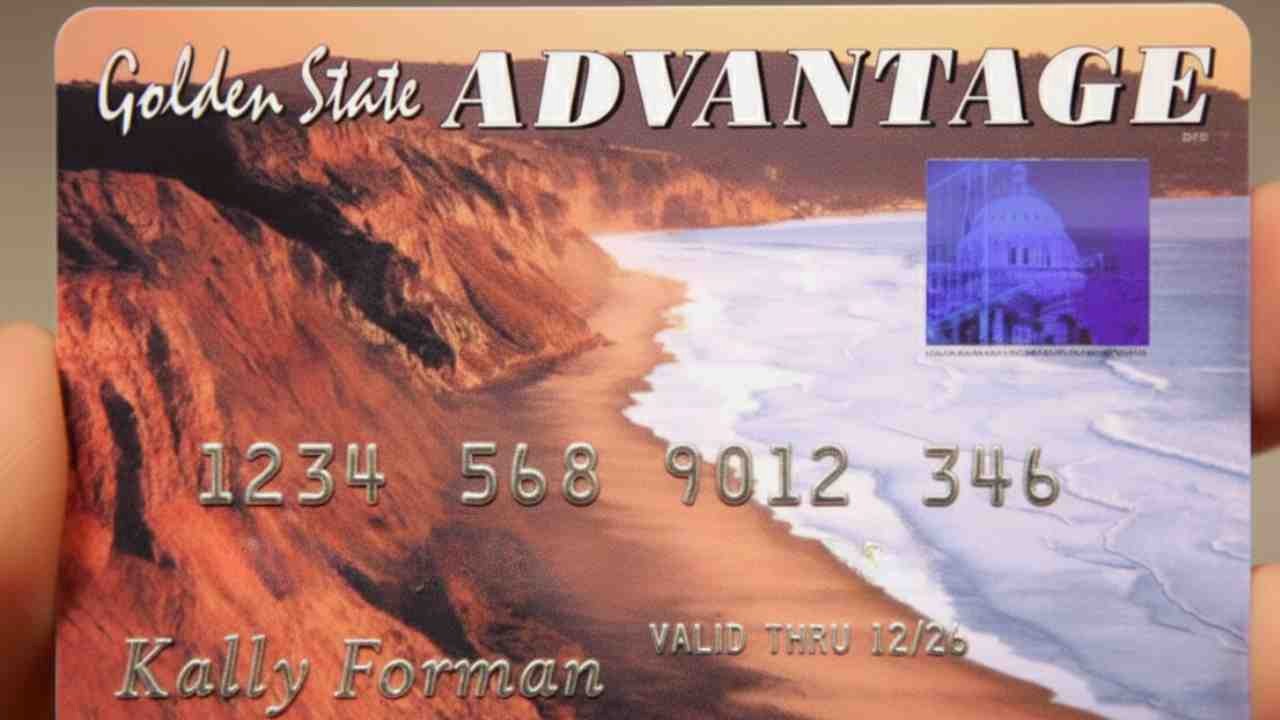
After this major national upheaval, payments returned to normal and, in December, they are already being distributed according to the schedule through Electronic Benefit Transfer cards, which in California is known as “Golden State Advantage“.
CalFresh and its EBT “Golden State Advantage” card
The EBT (Electronic Benefit Transfer) card is the primary way to receive and use CalFresh benefits. It works much like a bank debit card. Each month, the benefit amount is electronically deposited into an account linked to this card. The beneficiary can then use it to pay at authorized merchants by entering a security PIN.
With the CalFresh EBT card, you can buy almost all the food you need to prepare and eat at home, such as fruits, vegetables, meats, dairy products, breads, cereals, and seeds for growing food.
However, it is strictly forbidden to use it to buy alcohol, tobacco, medications, vitamins, cleaning products, freshly prepared hot food (such as from a deli counter), or any non-food items. It is important to remember that unused benefits can accumulate month after month, allowing families to save for future needs.
CalFresh Payment Schedule for December 2025
Benefits are deposited onto your EBT card between December 1st and 10th. Your specific payment date depends on the last digit of your case number.
| Last Digit of Case Number | Payment Date (December 2025) |
|---|---|
| 1 | December 1st |
| 2 | December 2 |
| 3 | December 3 |
| 4 | December 4th |
| 5 | December 5th |
| 6 | December 6 |
| 7 | December 7 |
| 8 | December 8 |
| 9 | December 9 |
| 0 | December 10 |
New CalFresh Requirements Affecting Specific Groups
There are regulatory changes, both being implemented immediately and planned for the future, that affect eligibility and benefit amounts for veterans, seniors, and the homeless. It is crucial to pay attention to these developments.
For seniors (age 60 and older) and people with disabilities, there are two positive changes. Starting December 1, 2025, and for a one-year trial period, households with two or more people in this group will receive a guaranteed minimum benefit of $60 per month, even if the standard calculation results in a lower amount.
Additionally, as of November 1, 2025, a rule allowing them to increase their benefit has been simplified. To claim a utility cost deduction (SUA), which increases the final CalFresh amount, these households no longer need to demonstrate separate heating or cooling costs. This flexibility makes it easier for them to access additional assistance.
Veterans and ABAWDs
The situation for veterans and working-age adults (18 to 64 years old) without dependent children (ABAWDs) is more complex due to a federal change that reinstates work or activity requirements. In theory, this group must participate in work, community service, or training activities for at least 80 hours per month to maintain their CalFresh eligibility.
However, there is a significant discrepancy in reported timelines. While one local news source indicates that these requirements are already in effect, official agencies in the state of California and San Francisco County state that the state is still awaiting final federal guidance on implementation and that, therefore, they will not begin before 2026 or even 2027.
Until there is an official and uniform announcement, the latter date should be considered the most reliable. It is important to know that there will be exemptions to this rule, such as for people with a physical or mental condition that prevents them from working, part-time students, people with a child under 14 years old, or participants in drug or alcohol treatment programs.
As for the homeless, their eligibility for CalFresh remains unchanged. In fact, this group can apply for expedited benefits (within 3 days) due to their housing situation. However, adults within this group who do not have minor children and are of working age would eventually be subject to the same work requirements mentioned above, once these take effect.
One future change that could affect some is the reinstatement of asset limits (such as money in bank accounts) for Medi-Cal eligibility, scheduled for 2026, although this is a separate health program from CalFresh.