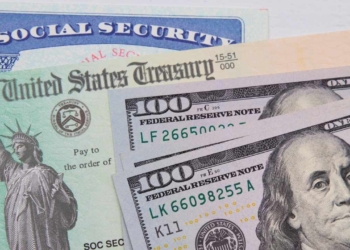

The tax season 2026, that’s now beginning, is set to be historic, not because of the amount collected, but because of the sums the federal government will return to taxpayers’ pockets. An independent economic analysis projects that next year’s refunds could increase significantly on average, marking the largest tax refund in U.S. history.
This phenomenon, which is already being felt as a tailwind in the domestic economy, has a clearly defined political origin: the Working Families Tax Cuts Act, championed by President Donald J. Trump and passed without a single Democratic vote in Congress last July.
Your Next Tax Refund Could Be the Biggest You’ve Ever Seen
According to an Oxford Economics report led by economist Nancy Vanden Houten, the substantial changes introduced by the legislation, which Republicans have colloquially dubbed the “One Big Beautiful Bill Act“, or OBBBA, act, are retroactive to the beginning of this year.
However, because the Internal Revenue Service (IRS) withholding tables have not yet been updated, millions of workers have been overpaying taxes on each paycheck. The result, experts say, will be a massive tax refund concentrated in the next tax year.
Vanden Houten wrote in the October 21 report: “the taxpayers will pay too much tax this year and will see larger tax refunds or smaller tax bills next year than would otherwise be the case.” She added that this will likely produce a “windfall in the 2026 tax season through larger refunds and lower tax bills.”
The Reason Behind This Year’s Record-Shattering Tax Refunds
The Oxford study estimates that total savings for taxpayers could amount to an additional $50 billion, representing an 18% increase over the $275 billion returned in the previous cycle. While the analysis does not project an average individual figure, IRS data suggests that refunds could exceed last year’s average of $2,939 by more than $1,000.
However, the distribution of this benefit is not uniform. The economist herself warns that a “disproportionate share of the benefits will go to higher-income households.”
This assertion is supported by a parallel analysis from the Tax Policy Center, which estimates that 6 out of every 10 dollars of the new tax cuts from the OBBBA act will go to the top 20% of households in terms of income—those earning more than $217,000 annually.
Check These Numbers and Aim to Claim a Bigger Tax Refund
The table of projected savings for 2026 is telling: while the lowest quintile would see relief of $150 and the middle-class one of $1,780, the wealthiest 1% (incomes above $1.1 million) would benefit from $75,410, and the top 0.1% from a tax reduction of $286,440.
One of the most noteworthy structural changes is the increase in the State and Local Income Tax (SALT) deduction limit, raised from $10,000 to $40,000. This measure, a key political concession to secure votes in high-tax states, can only benefit those who itemize their deductions, a practice almost exclusively among high-income taxpayers. Oxford Economics estimates that this adjustment alone will inject $5.1 billion in tax savings, concentrated in the upper income brackets.