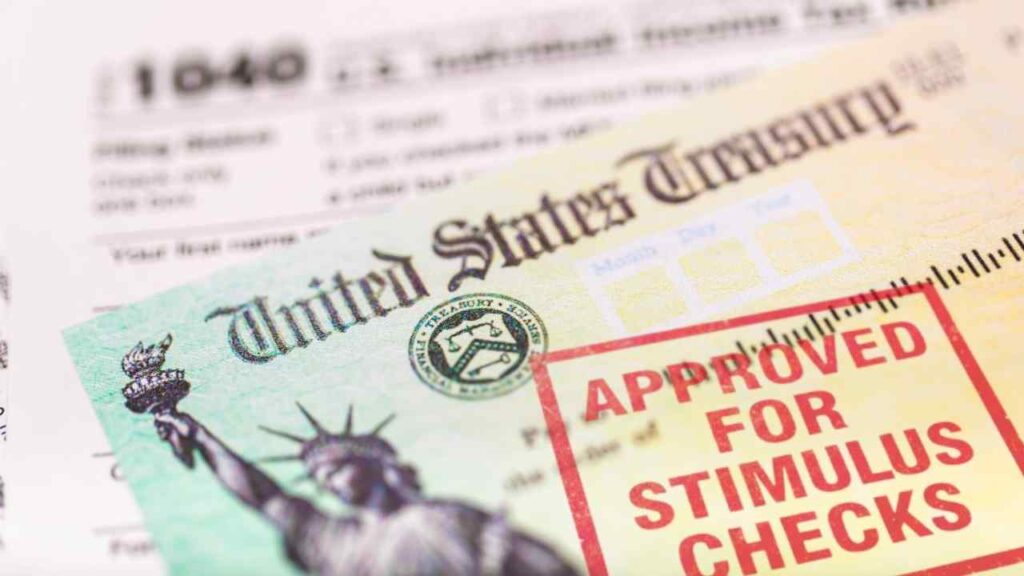
The idea seems simple and powerful: a $2,000 stimulus check for millions of Americans, financed not with debt, but with money raised from import tariffs. This proposal, circulating in the political sphere with a tentative date of “late 2026,” has generated considerable anticipation.
However, a closer examination reveals a chasm between the announcement made by President Donald Trump and a possible reality, a labyrinth of financial, legal, and political hurdles that, for now, make it an extremely dubious promise.
That $2,000 Check You Keep Hearing About
At first glance, the proposal rests on the premise that tariff revenues will be sufficient to fund the payments. However, analyses by independent budget experts paint a very different picture. Institutions such as the Tax Foundation and the Committee for a Responsible Federal Budget have run the numbers.
Their estimates coincide on a gigantic gap: while annual revenue from the new tariffs could be around $200 billion, the cost of distributing $2,000 checks far exceeds that figure. Total spending is estimated to be in the range of $450 billion to $600 billion. Yep, such huge numbers, aren’t they?
But suppose the money is found (which we can’t assume so far). Immediately, the plan hits a legal wall from the highest court. The very legal basis for the tariffs is being challenged before the Supreme Court. The pending ruling could nullify the executive authority to impose such tariffs.
The Quiet Hurdle for 2026 Stimulus Checks
If the Supreme Court rules against it, the government would potentially be forced to “return hundreds of billions of dollars to importers,” according to constitutional experts. This scenario would not only deplete the supposed fund for the checks but also create a multi-billion dollar payment obligation. The entire structure rests on shaky legal ground.
Then there is the question of power. Can the President authorize direct payments of this magnitude without Congress? Although the possibility of executive action has been hinted at, past statements by senior officials in the Trump administration itself suggest otherwise.
Both the former Treasury Secretary and White House economic advisors have been clear that such a distribution would “almost certainly require congressional approval.” In the current political climate, with its deep partisan divide and congested legislative agenda, the prospect of such a bill advancing seems, at best, remote. No legislation currently in circulation seeks to make it a reality.
The last words on this from Trump is that he aims to deliver the tariff-backed stimulus checks “by the end of the year” 2026.
Watch Out for Scammers Out There
While politicians debate and judges deliberate, a battle with real victims is already being waged in the digital streets. Scams have flourished, taking advantage of the confusion. Authorities are warning about messages asking for “data verification” or a “small fee” to access the money.
The FTC and the IRS have issued warnings: no official program contacts citizens in this way. The rush to believe the promise is being exploited by criminals, a sad side effect that is already causing financial harm to hopeful people.