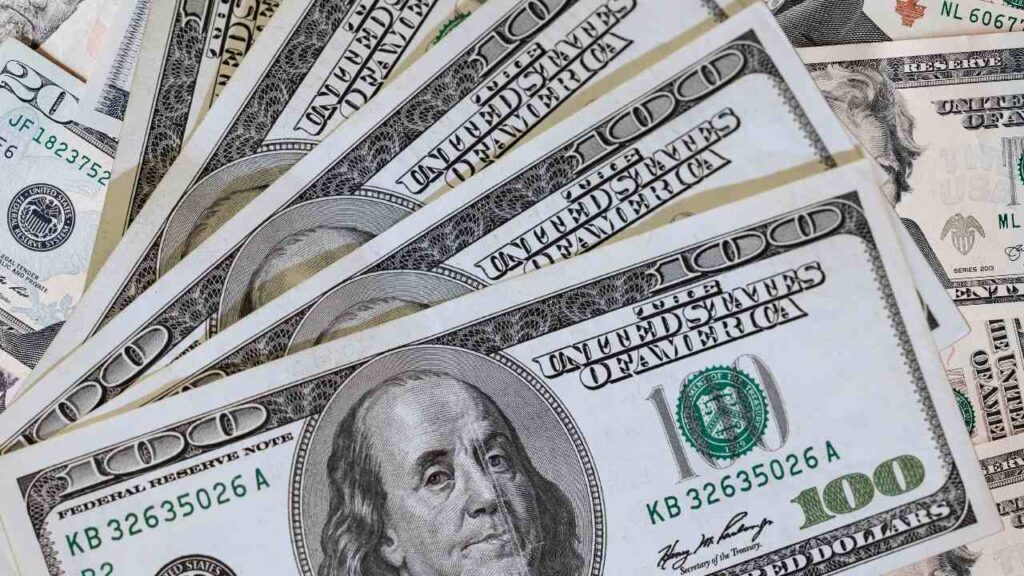
While rumors of new federal payments circulate, the reality is that only one state has confirmed direct payments in 2026, marking the end of an era of widespread stimulus checks. Public confusion is understandable: high-profile policy proposals and state programs with similar names but different rules create a maze of information.
We checked on official documents and statements from tax authorities, to break down the true picture of direct stimulus checks to taxpayers, separating verified facts from mere speculation.
Colorado: The only one with a stimulus check in hand
Colorado is, to date, the only jurisdiction that has distributed direct payments to taxpayers since the beginning of 2026. This money is not a discretionary “stimulus,” but rather the fulfillment of a constitutional mandate known as TABOR (Taxpayer’s Bill of Rights), which requires the state to return surplus revenue.
However, those expecting sums similar to the $800 or $1,600 of previous years were in for a surprise: the refunds for fiscal year 2024-25 are significantly smaller. The total surplus was $297 million, and after covering tax breaks for veterans and senior citizens, the remainder is distributed through an income-based sales tax refund.
The amounts, already distributed, range from $19 for low-income individual filers to $118 for high-income couples. A spokesperson for Governor Jared Polis’s office attributed the reduction and the expectation of no TABOR refunds in 2027 to the Trump administration’s federal tax reform, “which blew a billion-dollar hole in Colorado’s budget.”
New Jersey: A Tax Relief Ecosystem (With Overdue Deadlines)
New Jersey operates a well-established network of property tax relief programs, often mistaken for stimulus checks. The ANCHOR and Senior Freeze programs have already begun their payment cycles in 2025. New for 2026 is the StayNJ program, designed for seniors, whose quarterly payments are scheduled to begin this year, subject to budget approval.
The crucial warning is that the application period for all these benefits for fiscal year 2026 closed on October 31, 2025. The state’s Division of Taxation has already been processing applications and sending out notifications and payments in stages.
For those who did not apply on time, the window of opportunity to receive up to $1,750 from the ANCHOR program or StayNJ benefits this year is closed.
States That Closed Stimulus Checks Chapters: New York and Virginia
Some states implemented one-time payments in 2025 whose distribution cycles extended into early 2026, with no plans to repeat them.
- New York: It began distributing its “inflation refund checks” in September 2025. These one-time payments, up to $400, were automatically issued to taxpayers who met the income thresholds on their 2023 tax return. State tax authorities have not indicated any intention to repeat this initiative in 2026.
- Virginia: Implemented a tax refund for 2024, with amounts of $200 (individual) and $400 (joint). The distribution process began after the November 2025 filing deadline, so many residents received the funds in late 2025 or early 2026. There has been no announcement of a new round.
The Political Fog: The $2,000 Federal Proposal
Outside state-level initiatives, there is talk of a potential “tariff dividend” of around $2,000 per person. This proposal, mentioned by President Trump, lacks legal standing.
Any federal stimulus payment would have to be approved by Congress, and a related bill introduced in 2025 did not advance in committee.
Treasury Secretary Scott Bessent indicated that the administration is considering checks for families with incomes of $100,000 or less, but without legislation, it remains just a discussion.