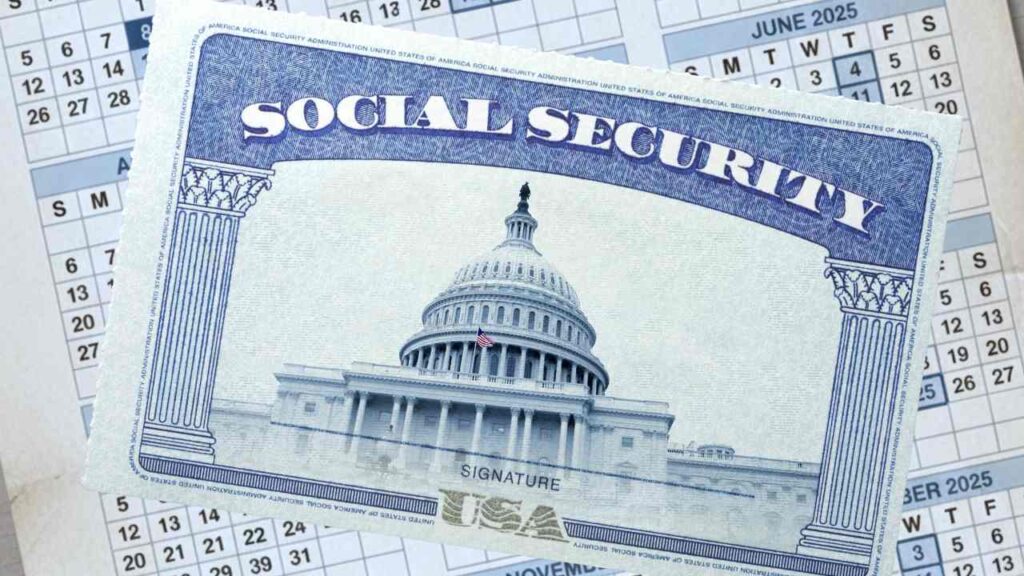
A $6,000 deduction is now law for some older Americans who receive Social Security benefits, a centerpiece of a major new bill signed by President Donald Trump. Promoted as historic relief, the reality is more complex, less generous, and comes with a significant long-term price tag that could undermine the very system it purports to help.
The core of the One Big Beautiful Bill Act (OBBBA) is a new, temporary tax deduction. From 2025 through 2028, taxpayers who rely on Social Security, aged 65 and older can deduct up to $6,000 from their taxable income. For a married couple where both spouses are eligible, that means up to $12,000.
New $6,000 Tax Deduction for Seniors in Effect Soon
It is available whether you take the standard deduction or itemize. However, this is not a blanket elimination of taxes on Social Security benefits, despite political claims to the contrary. The existing, complex formula that determines how much of your Social Security check is subject to federal income tax remains fully in place.
This new deduction simply lowers your overall taxable income, which can indirectly reduce the tax hit on your benefits along with other income like pensions or IRA withdrawals.
Eligibility is the first place where the promise meets the fine print. To qualify, you must be 65 or older by the last day of the tax year. This immediately excludes a vast swath of Social Security recipients: anyone who took early retirement at age 62, 63, or 64, and most people who receive Social Security Disability Insurance.
The Hidden Cost of the New $6,000 Senior Tax Break
Furthermore, the benefit is not for everyone. It begins to phase out for single filers with a Modified Adjusted Gross Income (MAGI) over $75,000 and for married couples filing jointly over $150,000. It vanishes entirely for singles at $175,000 and couples at $250,000.
For middle-income retirees, this can still provide meaningful savings. But for the lowest-income seniors, whose total income is already below the standard deduction threshold, it offers no benefit because they owe no federal income tax anyway. For higher earners above the phase-out, it also provides nothing.
The financial impact is real but specific. For example, a single retiree, aged 67, with a MAGI of $90,000. Under the phase-out rules, their $6,000 deduction might be reduced to, say, $3,000.
That deduction directly lowers their taxable income, potentially dropping them into a lower marginal tax bracket and saving them hundreds of dollars. For a married couple with a combined MAGI of $160,000, their phased-down deduction could still amount to a significant sum. It is tangible money. But it is a far cry from the “no more taxes on your benefits” headline.
Is the SSA at Risk With These Tax Cuts?
The most critical and underreported consequence of this law is its effect on the solvency of Social Security itself. Here lies the profound trade-off. The taxes that people pay on their Social Security benefits are not general revenue.
By law, every dollar of those taxes is funneled directly back into the Social Security and Medicare Part A trust funds. In 2024, this stream provided over $55 billion in essential funding. By introducing a deduction that reduces the amount of taxable income—and therefore the taxes paid—this law intentionally reduces the revenue flowing into these trust funds.
According to analysis from the nonpartisan Committee for a Responsible Federal Budget, this change could accelerate the projected insolvency date of Social Security’s retirement trust fund from 2033 to 2032. Insolvency is not an abstract concept; it triggers automatic, across-the-board benefit cuts for every beneficiary unless Congress intervenes. In essence, the law trades a modest, temporary tax cut for a subset of retirees today for a heightened risk of substantial benefit cuts for all retirees in the near future.