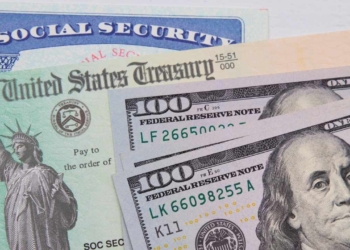
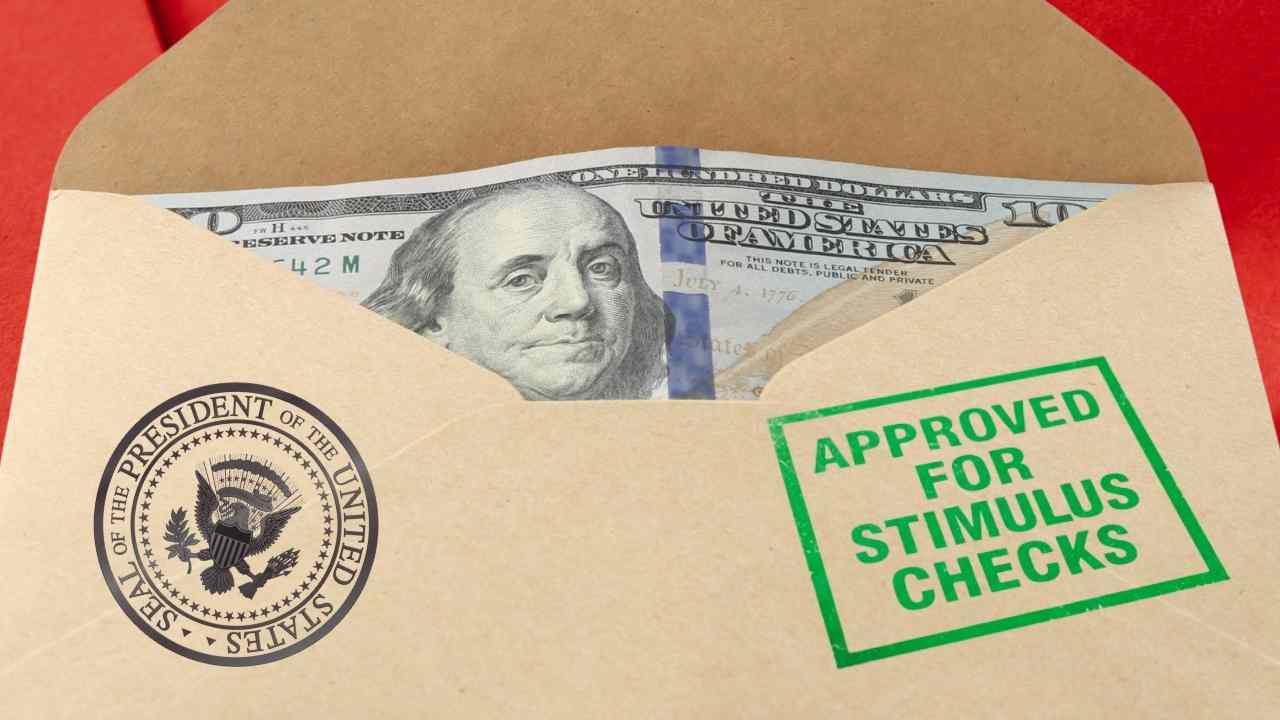
The pledge landed with the force of a political guarantee by President Donald Trump: $2,000 stimulus checks to millions of Americans, a “tariff dividend” funded by taxes on imported goods.
First floated by President Trump last summer, the idea immediately captured the public’s imagination, promising a direct economic boost divorced from crisis or emergency. But as winter settles over the capital in early 2026, that guarantee has dissolved into a thicket of unanswered questions, legal peril, and a fundamental disagreement over power itself.
Your “Tariff Dividend” Stimulus Check: Is It Actually Coming?
The administration’s timeline has already softened, from an initial suggestion of mid-2026 to the president’s more recent projection that checks could arrive “toward the end of the year.” A deeper investigation reveals a proposal not merely delayed, but actively stranded by the rigid realities of governing.
The most concrete obstacle is basic computing. A single round of $2,000 universal payments carries an astronomical price tag, estimated by budget analysts at between $450 and $600 billion. The designated funding source—revenue from tariffs—collects roughly half that amount annually, somewhere in the neighborhood of $200 to $300 billion. This isn’t a minor shortfall; it’s a canyon.
“The proposal is fiscally incoherent on its face,” remarked a former director of the Congressional Budget Office, who spoke on condition of anonymity. “You’re pledging a multi-hundred-billion-dollar expenditure against a revenue stream that is both insufficient and legally precarious.” The administration has not produced a formal proposal to reconcile these numbers.
The White House Debate Over Your Stimulus Payment
That legal precariousness is the second, and perhaps more dangerous, fault line. The entire financial architecture of the plan is under direct assault at the Supreme Court. Justices are currently deliberating a case that challenges the constitutional validity of the tariffs themselves.
A ruling against the government could trigger a mandate to refund tens of billions of dollars already collected, obliterating the putative “dividend” fund and potentially leaving the Treasury with a massive liability. This isn’t a peripheral concern; it is an existential threat to the policy’s foundation.
Complicating matters further is a stark, public rift within the administration over basic authority. While President Trump has hinted at acting without legislative approval, his own Treasury Secretary, Scott Bessent, has explicitly and repeatedly contradicted that notion.
Bessent has asserted that any such new program “would require legislation” from Congress. This view is not a partisan one; it is rooted in the bedrock constitutional principle that the power of the purse resides with the legislative branch.
The Difference From the COVID-era Stimulus Checks
The COVID-era stimulus checks, often cited as a precedent, were explicitly authorized by Acts of Congress. Yet on Capitol Hill, the silence is deafening. Senator Josh Hawley’s attempt to codify the idea, the American Worker Rebate Act of 2025, was introduced last November to immediate legislative oblivion.
It has received no hearing, no vote, and no discernible momentum—a clear signal from Congress that it feels no urgency to act.
Coming back to the current proposal, the timeline of events has changed several times. After gaining media traction through the latter half of 2025, the idea saw Senator Hawley’s legislative translation in November, coinciding with the Supreme Court’s agreement to hear the pivotal tariff case.
In a revealing moment during a January 7 interview, President Trump briefly seemed to forget the proposal before reaffirming it. The most definitive schedule offered remains his January 20 comment pointing to year’s end.
But, Watch Out for Scammers Offering Stimulus Checks
This political limbo has created a dangerous vacuum, one now filled by criminal enterprise. The Federal Trade Commission and the IRS have issued a flurry of alerts about an explosion of sophisticated scams. Fraudsters are bombarding phones with texts and emails urging people to “claim” or “activate” their $2,000 tariff payment by clicking links or sharing sensitive data.
“These offers are completely fraudulent,” an FTC spokeswoman stated bluntly. “Legitimate government payments do not require you to pay a fee or give your bank information over text message.” The scams are a perverse indicator of the proposal’s potency in public discourse, even as its prospects in official channels dwindle.