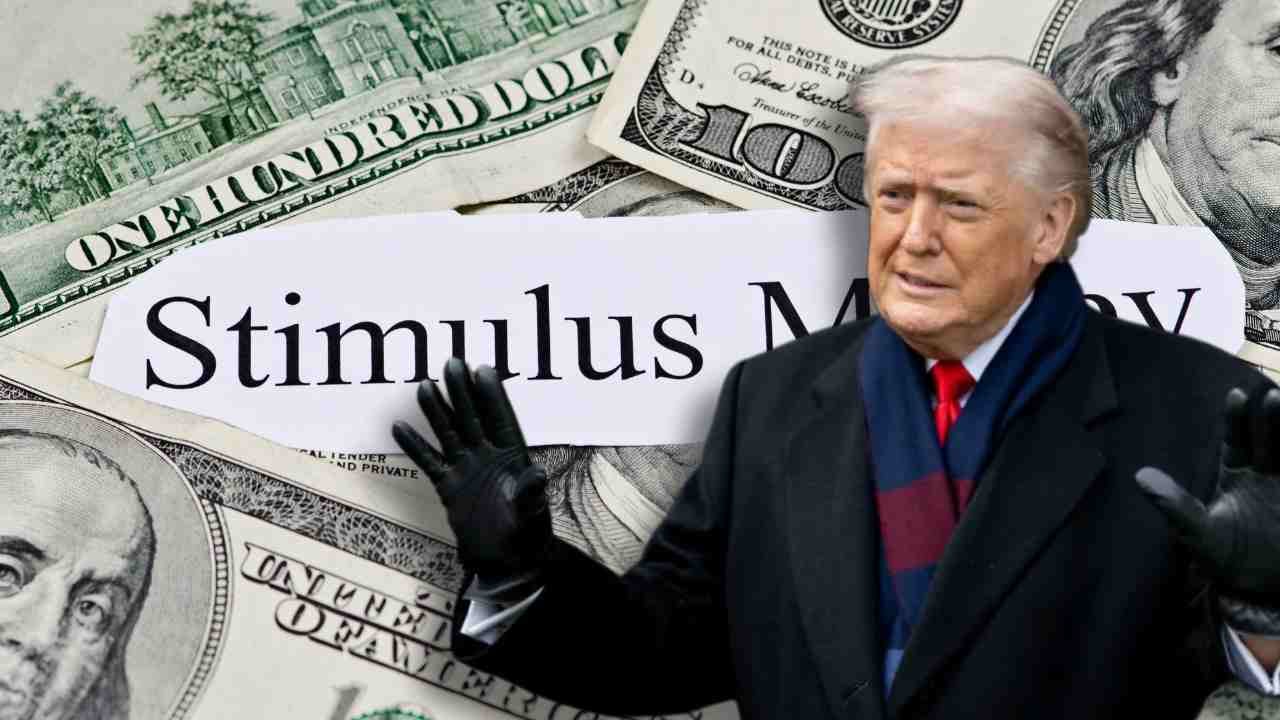
In the intimate setting of a rally, before a crowd chanting his name, the promise rings out simple and powerful: a stimulus check for thousands of dollars for working families, financed not with debt, but with import tariffs. revenue.
It is a politically crystal-clear offer, a “them” versus “us” narrative that president and (by-then-candidate) Donald Trump has outlined on various platforms. However, when this promise is taken from the fervor of the campaign trail to the cold dissection table of political, economic, and legal viability, the picture blurs, revealing what a vast majority of analysts, economists, and lawmakers from both parties describe as a mirage of monumental proportions.


The $2,000 Tariff Dividend: Fact-Check of Trump’s Promise
The proposal, as outlined in public statements and on the social media platform Truth Social, calls for the creation of a “tariff dividend.” This would consist of a one-time payment of at least $2,000 per person, targeted at low- and middle-income Americans, with an eligibility threshold of around $100,000 in individual or family income.
The funding source, the core of the idea, would be the revenue generated by the massive global tariffs that Trump promises to implement, potentially 10% or more on all imports. On the surface, the equation seems appealing: the world pays, America receives. But the real arithmetic is ruthless.
Will Tariff Money Fund Your Next Stimulus Check?
According to a detailed analysis by the Tax Foundation, an impartial think tank, the numbers simply don’t add up. The cost of sending $2,000 checks would range from $280 billion to $607 billion. Even under the most optimistic projections, the new tariffs would generate at most $158 billion to $207 billion annually.
This creates a structural deficit of hundreds of billions. Proponents argue that a ten-year revenue projection could be used, but that creative accounting clashes with another recurring promise: using those same revenues to pay for tax cuts and reduce the national debt. Money simply can’t be in three places at once.
The $2,000 Stimulus Checks: Timelines, Eligibility, and Likelihood
The most immediate and insurmountable obstacle, however, isn’t on an economist’s whiteboard, but rather in the halls of the Capitol. The Constitution is clear: the power to spend resides in Congress. Any program of this magnitude requires the passage of a law. And there, the proposal encounters a wall of bipartisan skepticism.
Key figures within the Republican Party itself have expressed strong rejection. Senator Chuck Grassley, a veteran Republican, called it the “dumbest” idea he’d ever heard. Another colleague, though generally aligned with Trump, admitted that the proposal as is “will never pass” the Senate.
Furthermore, Democrats, for their part, see it as an inflationary and poorly designed expansion, far removed from the targeted stimulus they advocate. In the hypothetical case of a Trump victory, there is no visible base of support to turn this promise into law.