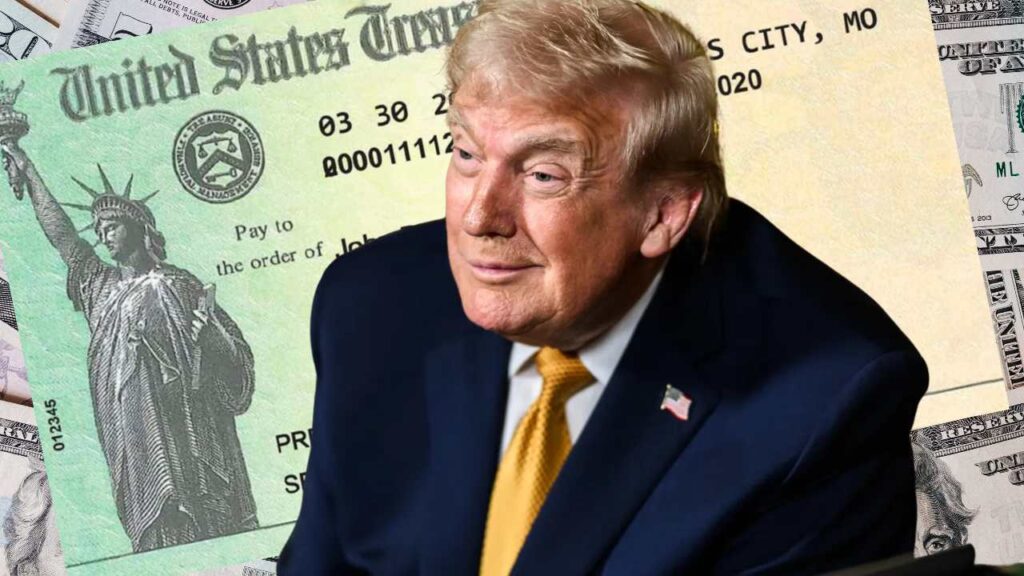
In a recent interview, Kevin Hassett, director of the White House National Economic Council, renewed President Donald Trump’s commitment to sending $2,000 stimulus checks to American families, funded by tariff revenues.
“Over the summer, I wasn’t so sure there was room for such a check. But now I’m pretty confident there is,” Hassett said on December 21, citing a shrinking deficit and near 4% economic growth as factors that make it possible next year.
However, behind this optimistic announcement lie two formidable obstacles: a skeptical Supreme Court that could invalidate the legal basis for the tariffs and stark expert analysis that says “the numbers just don’t add up.”
Trump’s Big Stimulus Checks Promise
The proposal, which Trump has dubbed a “tariff dividend,” promises at least $2,000 per person, excluding high-income individuals, possibly with a cap for households earning less than $100,000 annually.
According to Hassett, the president will submit a formal proposal to Congress in 2026 for authorization of the payments, as they cannot be made by executive order.
The funding would theoretically come from the revenue generated by the global tariffs Trump imposed this year, which raised $195 billion in fiscal year 2025, an increase of more than 150% over the previous year.
Why Your Promised Tariff Money Is Now in Doubt
However, nonpartisan budget organizations have run calculations that cast doubt on the feasibility. The Committee for a Responsible Federal Budget (CRFB) and the Center for Tax Policy estimate that the tariffs would generate between $200 billion and $300 billion annually.
In contrast, distributing a one-time payment of $2,000 to most adults (and possibly children) would cost around $600 billion, nearly double the projected annual revenue. “It’s clear that the incoming revenue would not be adequate,” said John Ricco, an analyst familiar with the matter.
This mismatch means that, to fund the dividend, the government would likely have to increase the deficit, contradicting the argument that the tariffs would help reduce the national debt.
The Fine Print Behind Trump’s Stimulus Checks Promise
The very viability of the tariffs that would fund the dividend hangs by a legal thread. On November 5, the Supreme Court heard arguments on whether Trump exceeded his authority by imposing global tariffs under the International Emergency Economic Powers Act (IEEPA).
During the hearing, key justices from the conservative bloc, including Chief Justice John Roberts and Justice Amy Coney Barrett, a Trump appointee, expressed deep concern and skepticism. Roberts questioned whether an ambiguous law could be used to grant “the power to impose tariffs on any product, from any country, in any amount.”
What Could Happen to the Tariffs Stimulus Checks?
A ruling against the administration would have immediate and massive consequences. Not only would it invalidate the tariffs, but it would also force the government to consider refunds to importing companies that have already paid them—a fund totaling nearly $90 billion.
Judge Barrett described this potential process as “complete chaos.” In that scenario, the dividend funding source would evaporate or be used for refunds, not checks for citizens. Hassett himself, despite his confidence in winning the case, acknowledged that an adverse ruling would greatly complicate any widespread refunds.
Treasury Secretary Scott Bessent has added ambiguity by suggesting that the “refund” could take the form of existing tax cuts, not new checks. Meanwhile, the market is watching closely. Analysts at Wells Fargo estimate that if the Supreme Court strikes down the tariffs, S&P 500 companies’ profits could rise 2.4% in 2026, easing pressure on their margins. Sectors like apparel, toys, and automotive, which are heavily dependent on imports, would be the biggest beneficiaries.