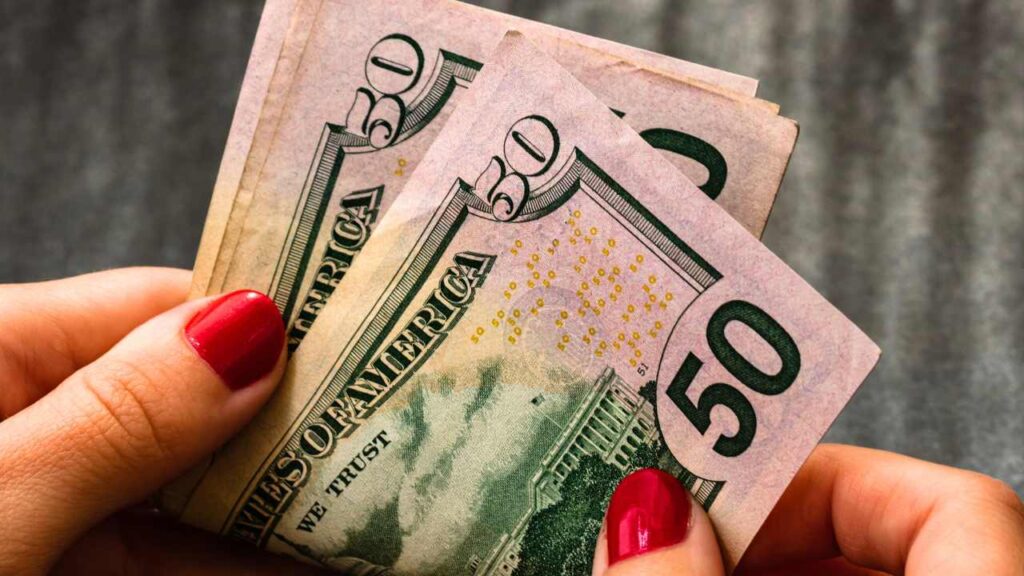
Two promises of money for Americans, two symbolic figures, and two economic narratives clash in Washington on the eve of the new year. On one hand, a $1,776 stimulus checks for military personnel is already on its way. On the other, a promise of $2,000 dividends for “everyone,” excluding the wealthiest, faces a wall of mathematical, legal, and political doubts.
This is the contrast between authorized spending and an idea that, for now, exists only on social media. Here’s all the truth you’ve been looking for and what to know about these two stimulus checks programs.
$1,776 Military Stimulus Checks Are Being Sent Out Now
On Thursday, December 18, President Donald Trump announced in a televised address to the nation that a “warrio dividend” of $1,776 would be sent to approximately 1.45 million members of the Armed Forces, a number chosen to honor the year of America’s independence.
“The checks are already on their way,” Trump declared, vaguely attributing the funds to tariff revenues and his major reform bill. However, the reality of the funding is more concrete and less novel.
The payments are not a Christmas bonus created out of thin air with tariff money, but a one-time supplement to the basic housing allowance that was already approved by Congress in mid-2025 as part of the “One Big Beautiful Bill Act” (OBBBA).
A senior official explained that Secretary of Defense Pete Hegseth directed the Pentagon to make these payments, which will cost a total of $2.6 billion and will be distributed to active duty and reserve personnel with the rank of colonel (O-6) or lower. It is a real expenditure, with allocated funds and in the process of being disbursed.
The Promise of $2,000 “Tariff Dividends”: An Idea Without a Plan
In stark contrast, the promise of a $2,000 dividend for the vast majority of Americans lacks any enforcement mechanism. Trump floated the idea in a November 9 post on Truth Social, writing, “A dividend of at least $2,000 per person (excluding high-income individuals!) will be paid to everybody.”
The proposal, which he has reiterated on several occasions, suggests using the “trillions” raised through his tariff policies to fund these payments. But budget experts and the facts quickly dismantle the promise’s feasibility. First, the math doesn’t add up. Tariff revenues, while substantially increased, are far from “trillion-dollar” figures.
White House Pushes $2,000 Stimulus Idea, Lawmakers Are Skeptical
The Treasury Department collected about $195 billion in fiscal year 2025, and projections for 2026 range from $200 billion to $300 billion annually. In contrast, giving $2,000 to every American adult earning less than $100,000 would cost about $300 billion. If children were included, as was done with pandemic relief checks, the cost would balloon to the gigantic number of $600 billion. In other words, the cost far exceeds the expected revenue.
Second, the administration doesn’t have a plan. Treasury Secretary Scott Bessent himself admitted in an interview on the day of the announcement that he hadn’t spoken with Trump about the proposed dividend.
Bessent suggested the $2,000 payment “could take many forms,” possibly referring to previously proposed tax cuts, such as not taxing tips or Social Security—a reinterpretation analysts see as overblown. Even Kevin Hassett, the White House’s top economic advisor, stated that the idea “will depend on what happens with Congress.”
SCOTUS Is in the Game
Third, there are the legal and political obstacles. The Supreme Court is reviewing the legality of the tariffs imposed unilaterally by Trump under emergency powers. If the court rules against them, a significant portion of the revenue could disappear, as the government might be forced to reimburse importers.
Furthermore, any direct stimulus payments require congressional approval to allocate the funds, a legislative process that has not yet begun and faces skepticism even among some Republicans concerned about the deficit and inflation.